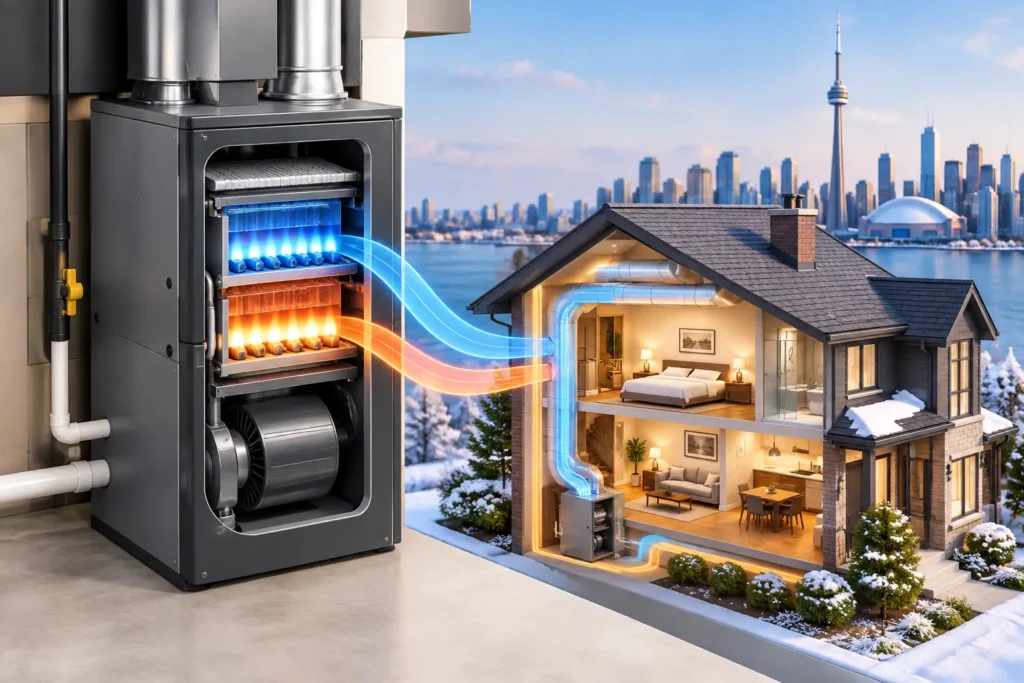
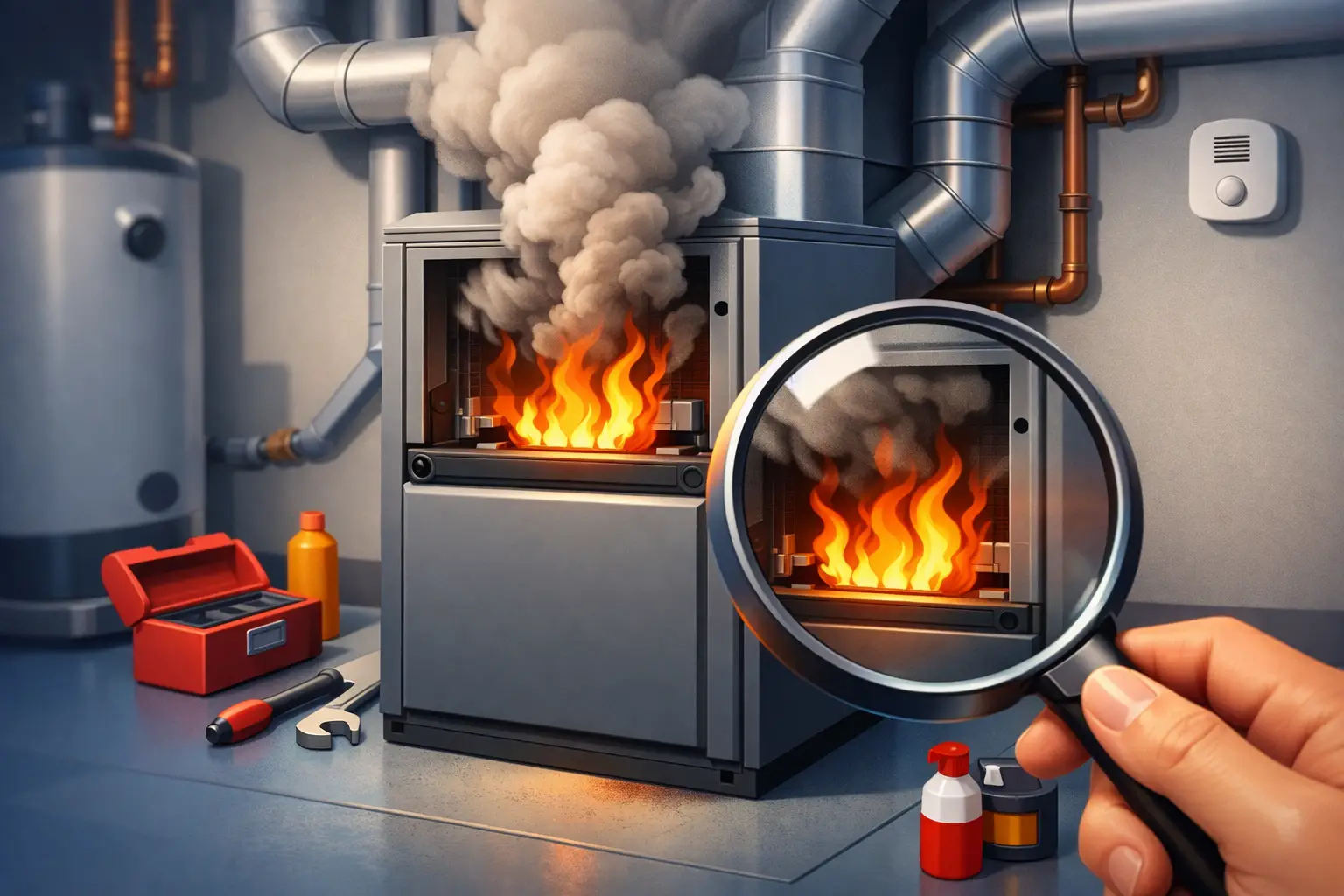
A burning smell from a furnace can make an ordinary cold GTA evening feel urgent fast. If you are asking, why does furnace smell burning, the answer may be as simple as dust heating up for the first time this season. It can also point to an electrical issue, an overheating component, or a combustion problem that needs prompt attention.
The key is the type of smell, how long it lasts, and whether it comes with other warning signs. Do not ignore a strong or persistent odour just because the furnace is still producing heat.
Why Does My Furnace Smell Burning?
A furnace creates heat, so some warm mechanical smells are possible. But a true burning smell is not one thing. Homeowners often use the same description for several very different odours, from dusty air vents to melting wire insulation.
Start by noticing whether the smell appeared after the furnace sat unused for months, whether it is fading or getting stronger, and whether you see smoke, hear unusual noises, or have a breaker trip. Those details help separate a routine seasonal smell from a service call.
Dust burning off after a long break
This is the most common and least concerning cause. During spring, summer, and early fall, dust can settle on the heat exchanger, burners, and nearby surfaces. When you turn the heating on for the first time, that dust warms up and creates a dry, slightly burnt smell.
The odour should be mild and should usually clear within 30 to 60 minutes of normal operation. Opening a window briefly and replacing a dirty furnace filter can help clear the air. If the smell remains after several heating cycles, becomes stronger, or is accompanied by smoke, turn the system off and have it checked.
A clogged filter or restricted airflow
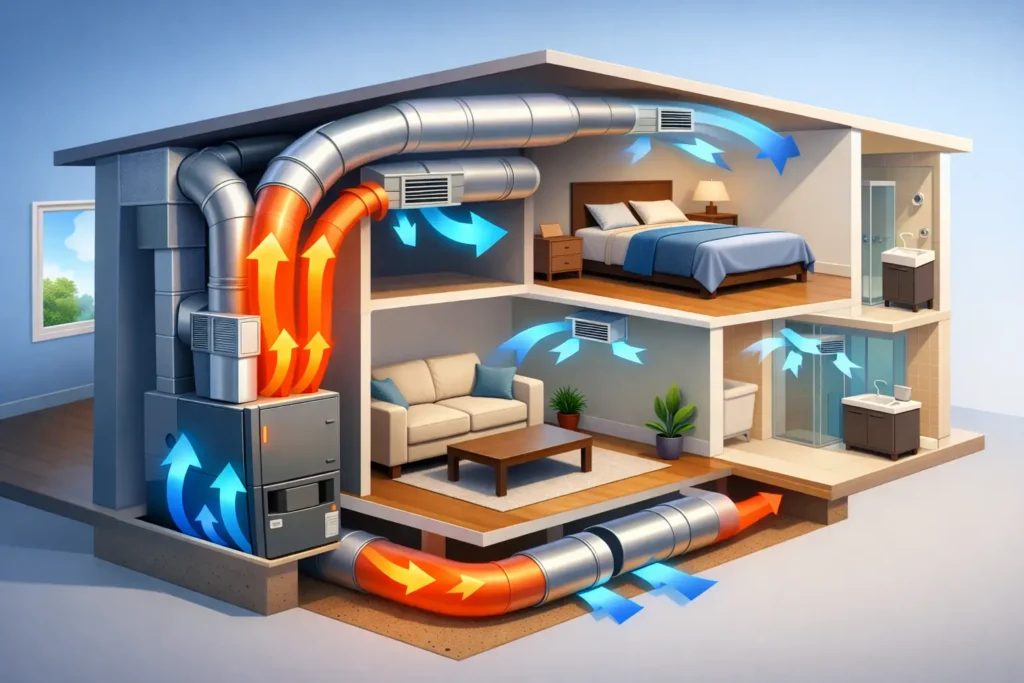
A heavily loaded air filter makes a furnace work harder to move air. Restricted airflow can cause the furnace to overheat and trigger its safety limit switch. You may notice the system turning on and off more often, weak airflow from vents, or a hot, dusty smell.
Check the filter only if you can do so safely and the furnace is off. If it is visibly dirty, install the correct size and type recommended for your system. Avoid using an overly restrictive filter simply because it sounds more effective. Some furnaces need a specific filter rating to maintain proper airflow.
Electrical or mechanical components overheating
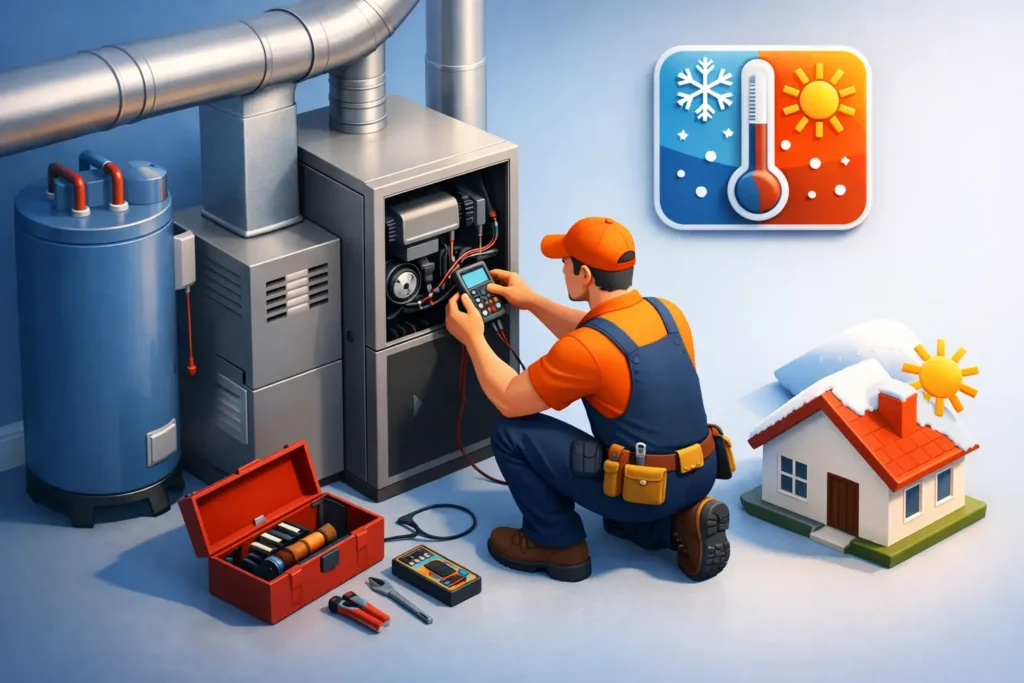
An electrical burning smell is more serious. It is often sharp, acrid, or similar to hot plastic, melting rubber, or overheated wiring. The source could be a blower motor, capacitor, control board, wiring connection, or another electrical component inside the furnace.
Do not remove furnace panels or try to locate the source yourself. Shut off the furnace at the thermostat, and if it is safe to do so, turn off power at the furnace switch or electrical panel. A certified technician should inspect the equipment before it is restarted.
Debris near the furnace or supply vents
Items stored too close to a furnace can overheat. Cardboard boxes, paint cans, household cleaners, laundry, and plastic storage bins should never be kept against or on top of heating equipment. A floor register can also give off a burning smell if a rug, toy, or other object is blocking it.
Clear the area around the furnace and keep the mechanical room clean. For gas furnaces, follow the clearance requirements for your specific model. Adequate space supports both safe operation and easier service access.
When a Burning Furnace Smell Is an Emergency
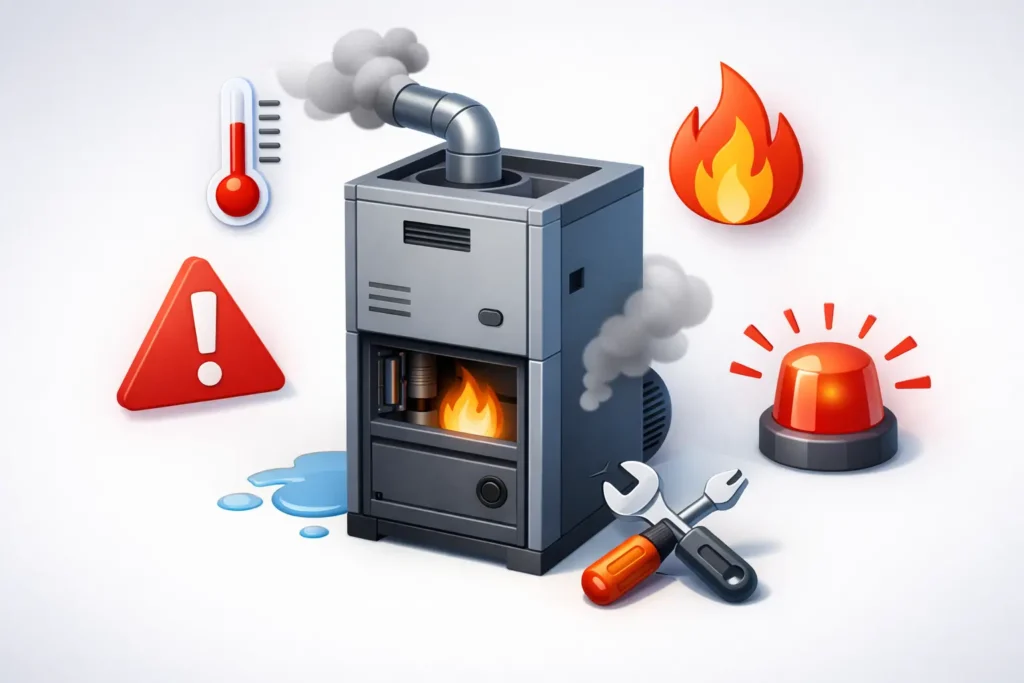
Turn off your furnace and arrange professional service immediately if you notice smoke, visible sparks, a burning-plastic smell, repeated breaker trips, or a smell that intensifies while the system runs. These are not conditions to monitor overnight.
Take these practical steps:
- Set the thermostat to off.
- Leave the furnace alone if you see smoke or suspect an electrical fault.
- Turn off electrical power to the furnace only if you can reach the switch or panel safely.
- Keep family members and pets away from the mechanical area.
- Call for qualified HVAC service. If there is an active fire or immediate danger, call 911.
A gas smell is different from a burning smell, but it is equally urgent. Natural gas is treated with a sulphur-like, rotten-egg odour so leaks can be detected. If you smell gas, do not operate switches, appliances, or phones inside the home. Leave the building, call your gas utility or 911 from a safe location, and do not return until you are told it is safe.
Carbon monoxide has no smell and no colour. A burning odour is not a reliable warning of carbon monoxide, which is why working CO alarms are essential in homes with fuel-burning appliances. If a CO alarm sounds, get everyone outside immediately and call 911.
How Long Should a Dusty Furnace Smell Last?
For a furnace that has been off for a season, a light dusty smell commonly disappears within the first hour. In some homes, it may return briefly during the next cycle as remaining dust warms up. It should not linger for days, fill the house with haze, or make anyone feel unwell.
The situation can depend on your home. A furnace in a dusty basement, a home under renovation, or a system that has missed annual maintenance may have more buildup than usual. Still, persistent odours deserve an inspection rather than repeated attempts to mask them with air fresheners.
What You Can Check Safely Before Calling
Homeowners can handle a few basic checks without opening the furnace cabinet. Confirm that furniture, boxes, and other stored items are clear of vents and the furnace. Look at the filter and replace it if it is dirty and you have the correct replacement. Check whether the smell occurs only when heating starts or continues throughout the cycle.
Also pay attention to furnace performance. Short cycling, cool air, loud rattling, a humming blower that will not start, or a thermostat that cannot maintain temperature provide useful clues for the technician. Write down when the problem began and whether a breaker has tripped.
Do not reset breakers repeatedly or bypass a furnace safety switch. Those protections are designed to stop operation when something is wrong. Restarting a unit without identifying the cause can turn a manageable repair into damage to the motor, controls, or wiring.
Prevent Burning Smells With Furnace Maintenance
Annual furnace maintenance helps prevent many odour-related calls. A technician can inspect electrical connections, check blower operation, verify safe venting and combustion, clean relevant components, and identify airflow problems before they cause overheating.
Filter changes matter too, particularly in homes with pets, construction dust, or high occupancy. The right schedule depends on the filter type and household conditions, but checking it monthly during heating season is a sensible habit. A clean filter supports airflow, comfort, and furnace efficiency.
For homeowners in Toronto and the GTA, dependable heat is not something to gamble with during a cold snap. Easy Breezy HVAC can assess persistent furnace odours, explain the cause clearly before work begins, and recommend the repair or next step that fits the condition of your system.
If the smell is mild, seasonal, and fades quickly, keep an eye on it. If it is sharp, smoky, electrical, or refuses to go away, trust that instinct: turn the furnace off and have a qualified technician take a look before the next cold night arrives.