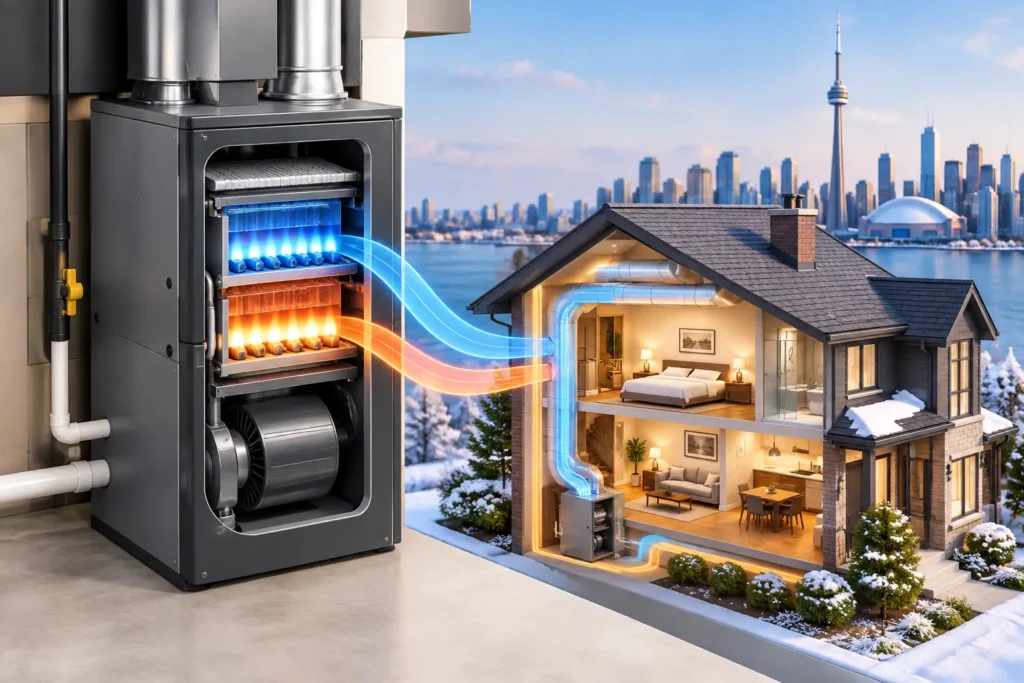
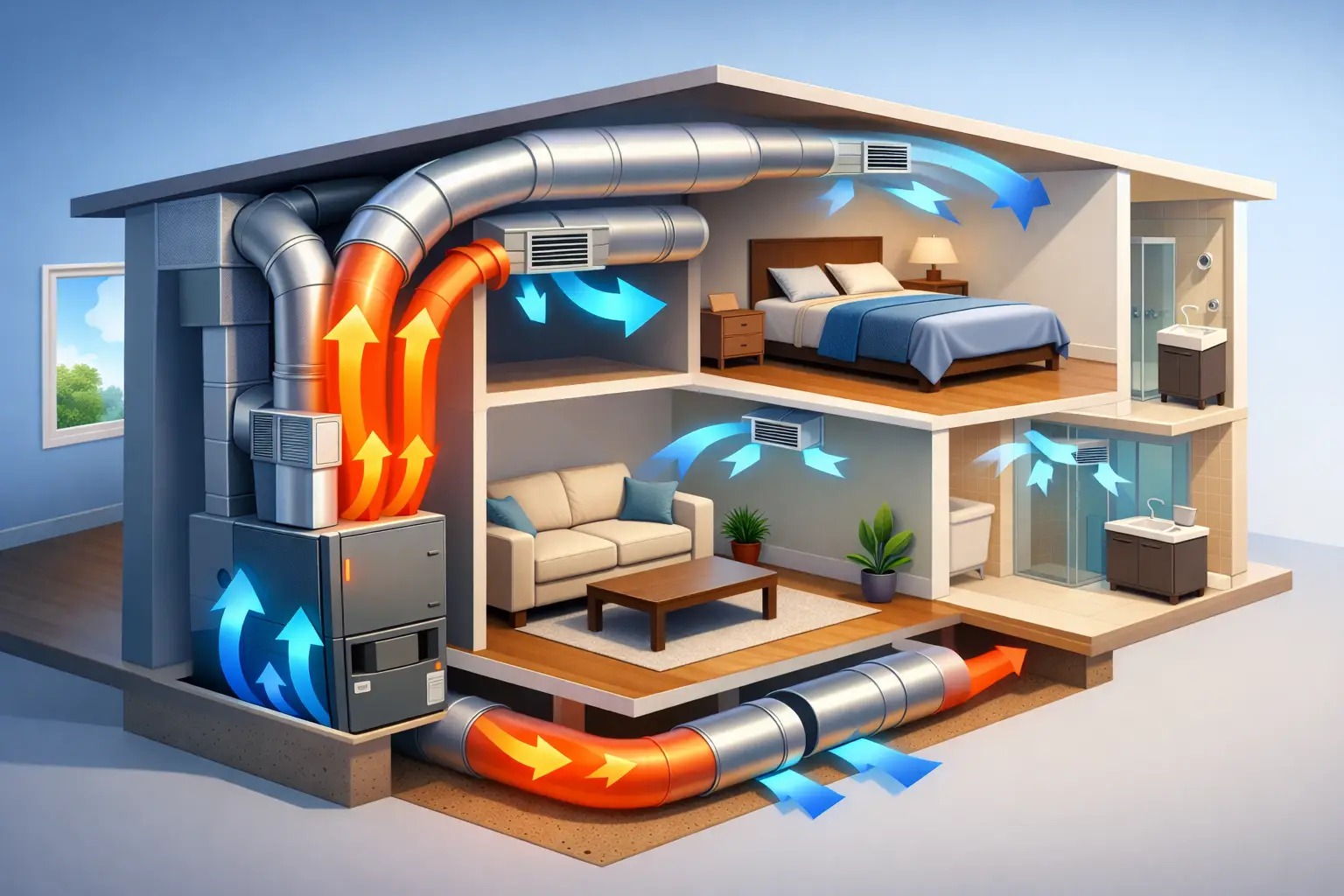
A furnace can be running normally while parts of your home stay cold. If one bedroom feels chilly, the basement is overheated, or some vents barely produce air, the issue may not be furnace capacity. Learning how to improve furnace airflow starts with understanding where that air is being restricted, redirected, or lost before it reaches the rooms that need heat.
For homeowners across Toronto and the GTA, airflow problems become especially noticeable during a long heating season. A few simple checks can make a meaningful difference. Others require a certified technician, particularly when the issue involves the blower motor, ductwork, combustion safety, or an incorrectly sized system.
How to Improve Furnace Airflow Safely
Start with the items that are safe to inspect without opening the furnace cabinet or changing electrical components. These basic steps often resolve minor comfort issues and can help your furnace operate with less strain.
Replace the furnace filter
A clogged filter is one of the most common causes of weak airflow. As dust, pet hair, and debris collect in the filter, the blower has to work harder to pull air through the system. That can reduce the air coming from supply vents, increase energy use, and contribute to overheating problems.
Check your filter monthly during heavy heating use and replace it as needed. Many homes need a new filter every one to three months, but the right schedule depends on the filter type, pets, renovations, allergies, and how often the system runs.
Filter selection matters as well. A very high-efficiency filter may capture more fine particles, but it can also create more resistance if your furnace and ductwork were not designed for it. If airflow dropped after switching to a denser filter, ask an HVAC professional whether the filter rating is appropriate for your equipment. The best filter is not always the most restrictive one.
Keep return air vents open and clear
Your furnace cannot deliver warm air effectively unless it can draw enough air back through the return vents. Return grilles are usually larger than supply vents and may be located on walls, ceilings, or in central hallway areas.
Do not block them with furniture, boxes, curtains, or rugs. Leave several inches of open space around each return grille. In homes with closed bedroom doors, a room may also struggle to circulate air if there is no adequate return path. If you notice a strong pressure difference when opening a bedroom door, that can be a clue that the room needs better air circulation.
Check supply registers throughout the house
Walk through the home while the furnace is heating and make sure supply registers are fully open, especially in rooms that feel cold. Rugs, furniture, and drapes can quietly block a floor or wall register. Even a partially covered vent can limit comfort in that area.
It is tempting to close vents in unused rooms to force more heat elsewhere. In most forced-air systems, closing several vents can increase pressure inside the ductwork and reduce overall airflow. It may make the furnace blower work harder without delivering the result you expect. Closing one register slightly for a minor adjustment is different from shutting down multiple rooms, but major balancing changes should be assessed professionally.
Look for Clues Beyond the Vents
If the filter and vents are clear but airflow still feels weak, pay attention to the pattern. The location and timing of the problem can help identify its likely cause.
Weak airflow at every vent may point to a dirty blower wheel, a failing blower motor, an undersized return-air system, or excessive resistance in the ductwork. These are not DIY repairs. The furnace should be inspected before a small airflow issue becomes a breakdown during cold weather.
Weak airflow in only one area often points to duct-related problems. A disconnected branch duct, crushed flexible duct, leaking joint, closed balancing damper, or poor duct layout can leave a particular room underheated. Rooms over garages, additions, upper floors, and far ends of the home are common trouble spots because they may have longer duct runs or greater heat loss.
Uneven heating can also be caused by insulation gaps, drafty windows, or a poorly sealed exterior wall. In that case, increasing furnace airflow alone may not fully solve the problem. A technician can help determine whether the system is underperforming or whether the room itself is losing heat too quickly.
When the Furnace Blower Needs Attention
The blower assembly moves conditioned air through your home. Over time, dust can build up on the blower wheel and reduce its ability to move air efficiently. A worn motor, weak capacitor, slipping belt on older equipment, or incorrect blower speed can also affect performance.
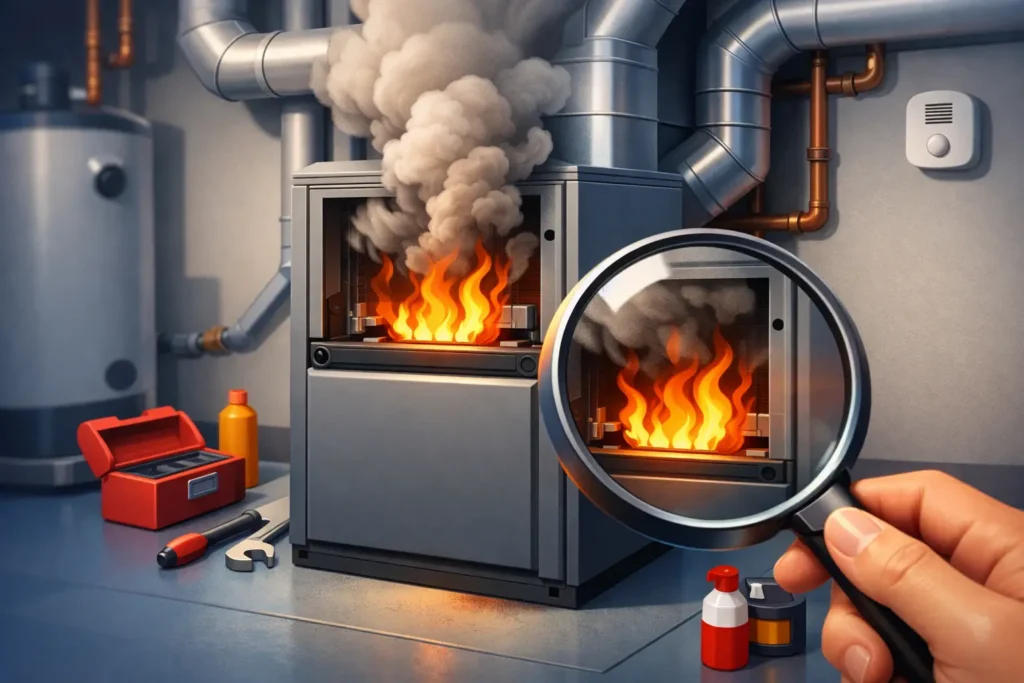
Signs that warrant a service call include new rattling or humming sounds, airflow that pulses or drops during a heating cycle, frequent furnace shutdowns, a burning smell, or noticeably higher heating bills. Do not remove panels or attempt to clean internal components unless you are qualified to do so. A furnace contains electrical connections, moving parts, gas components, and safety controls that need proper testing after service.
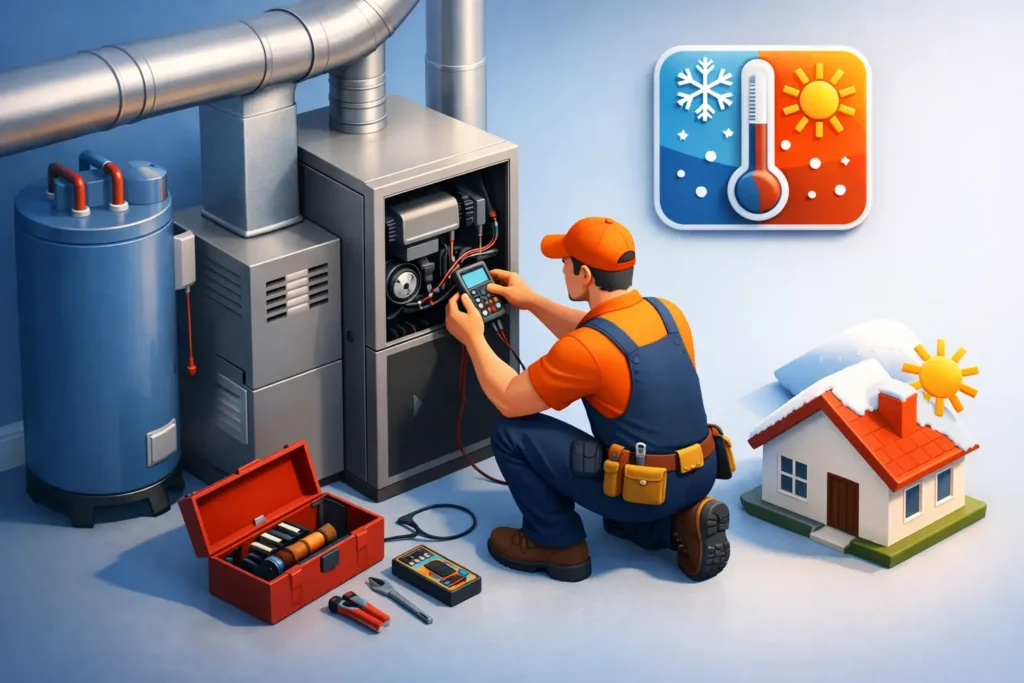
A certified technician can measure static pressure, inspect the blower, verify motor performance, and check whether the furnace is receiving enough return air. These measurements are more useful than judging airflow by hand at a register. They show whether the system is operating within the manufacturer’s required range.
Consider Your Ductwork, Not Just the Furnace
A new or high-efficiency furnace cannot overcome poorly designed or damaged ducts. Ductwork is the pathway that carries air through the home, and restrictions anywhere along that path affect comfort.
Leaky ducts can release heated air into basements, attics, crawl spaces, or wall cavities instead of delivering it to living areas. In older homes, ducts may be undersized for a replacement furnace or may have been altered during renovations. Long flexible duct runs can sag or kink, reducing the volume of air reaching a room.
Duct cleaning can help when there is visible debris, construction dust, pest contamination, or restricted airflow caused by a serious buildup. It is not a universal cure for uneven heating. If the real issue is a duct leak, poor design, or a blower problem, cleaning alone will not correct it. A proper assessment should come before spending money on a service that may not address the cause.
Use the Thermostat and Fan Settings Properly
Your thermostat can affect how evenly air circulates. If your thermostat has a fan setting, selecting continuous fan operation can help mix air between floors and reduce temperature swings. This uses more electricity than the automatic setting, so it is best used when the comfort improvement justifies the added cost.
Keep the thermostat away from heat sources, direct sunlight, fireplaces, and supply registers. A thermostat that senses heat too quickly may end the furnace cycle before distant rooms receive enough warm air. Smart thermostat schedules can also help, but they cannot correct a blocked return vent or undersized ductwork.
For homes with major temperature differences between floors, zoning, duct modifications, or a properly sized supplemental system may be worth considering. The right solution depends on the home’s layout, insulation, existing equipment, and budget. There is no single adjustment that fits every house.
Know When to Call a Professional
Book a furnace inspection if you have changed the filter, cleared vents, and still have poor airflow or uneven heating. Call promptly if the furnace cycles on and off repeatedly, makes unusual noises, produces burning odours, or stops heating altogether. If a carbon monoxide alarm sounds, leave the home immediately and contact emergency services and a qualified HVAC professional.
At Easy Breezy HVAC, certified technicians can inspect the full heating system, explain what is causing the airflow issue, and recommend repairs based on the condition of your equipment and home. Clear answers matter, especially when the solution could range from a filter change to duct repairs or furnace service.
A warm home should not depend on turning the thermostat higher and hoping for the best. Start with clean filters, clear vents, and open return-air pathways. If comfort still varies from room to room, having the system tested can protect your furnace, control heating costs, and help every part of your home feel more comfortable when winter settles in.