A hot water tank rarely fails at a convenient time. One day the shower runs cold, the next there is water collecting near the unit or a new rumbling sound from the utility room. Knowing what those signs mean can help you avoid an emergency replacement, protect your home from water damage, and choose equipment that suits your household rather than simply buying the fastest available option.
For homeowners and property managers, the right decision usually comes down to three questions: Is the existing tank safe to repair? How much hot water does the building actually need? And will a replacement lower operating costs enough to justify the investment?
When a Hot Water Tank Needs Attention
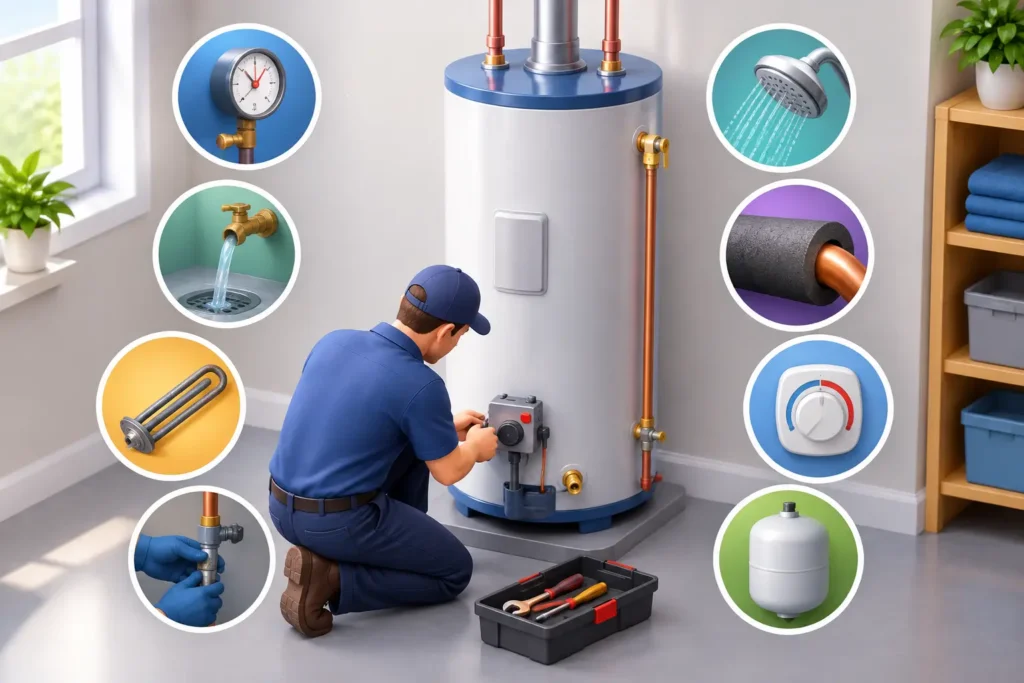
Not every water heating issue means the tank itself has reached the end of its life. A failed thermostat, heating element, pilot assembly, valve, or venting component can often be repaired. The right diagnosis starts with a certified technician identifying the source of the problem before recommending work.
A conventional tank typically lasts around 8 to 12 years, although water quality, maintenance, installation quality, and household demand all affect its lifespan. If your unit is approaching that range, small problems deserve prompt attention. A repair may restore hot water today, but an aging tank with corrosion or a recurring leak may not be a sensible long-term investment.
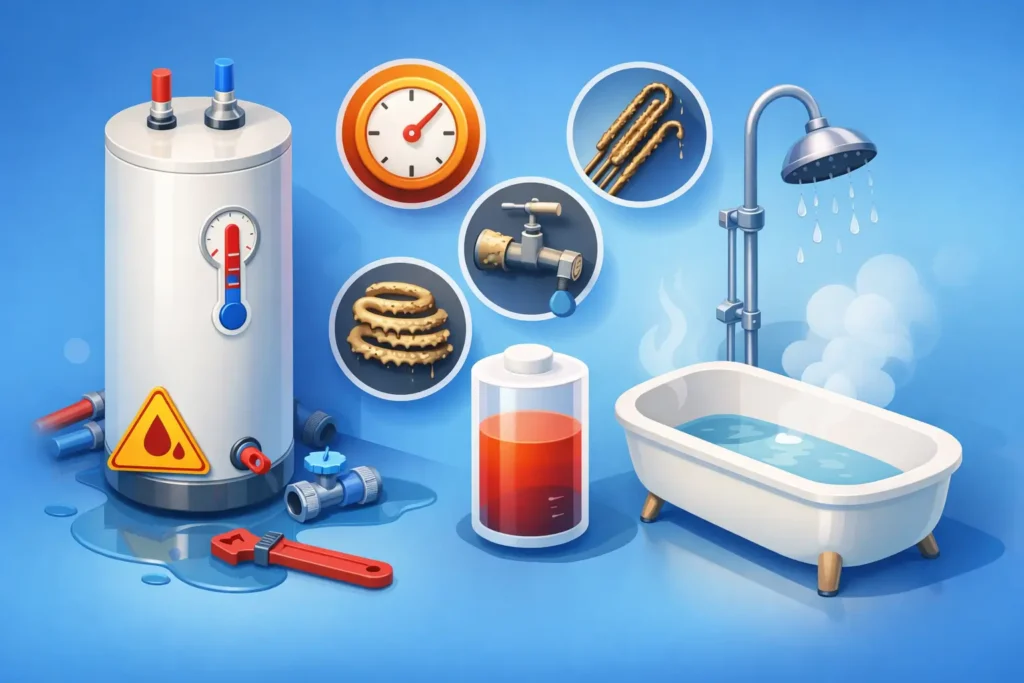
Watch for changes such as inconsistent water temperature, reduced hot-water volume, rusty-looking water, moisture around the base, or unusual popping and rumbling noises. Sediment can build up at the bottom of a tank over time, particularly in areas with harder water. That sediment makes the system work harder and can shorten its useful life.
A leak from a fitting or pressure-relief valve may be repairable. Water coming directly from the tank body is more serious. Once the tank itself has corroded through, replacement is generally the safe and practical choice.
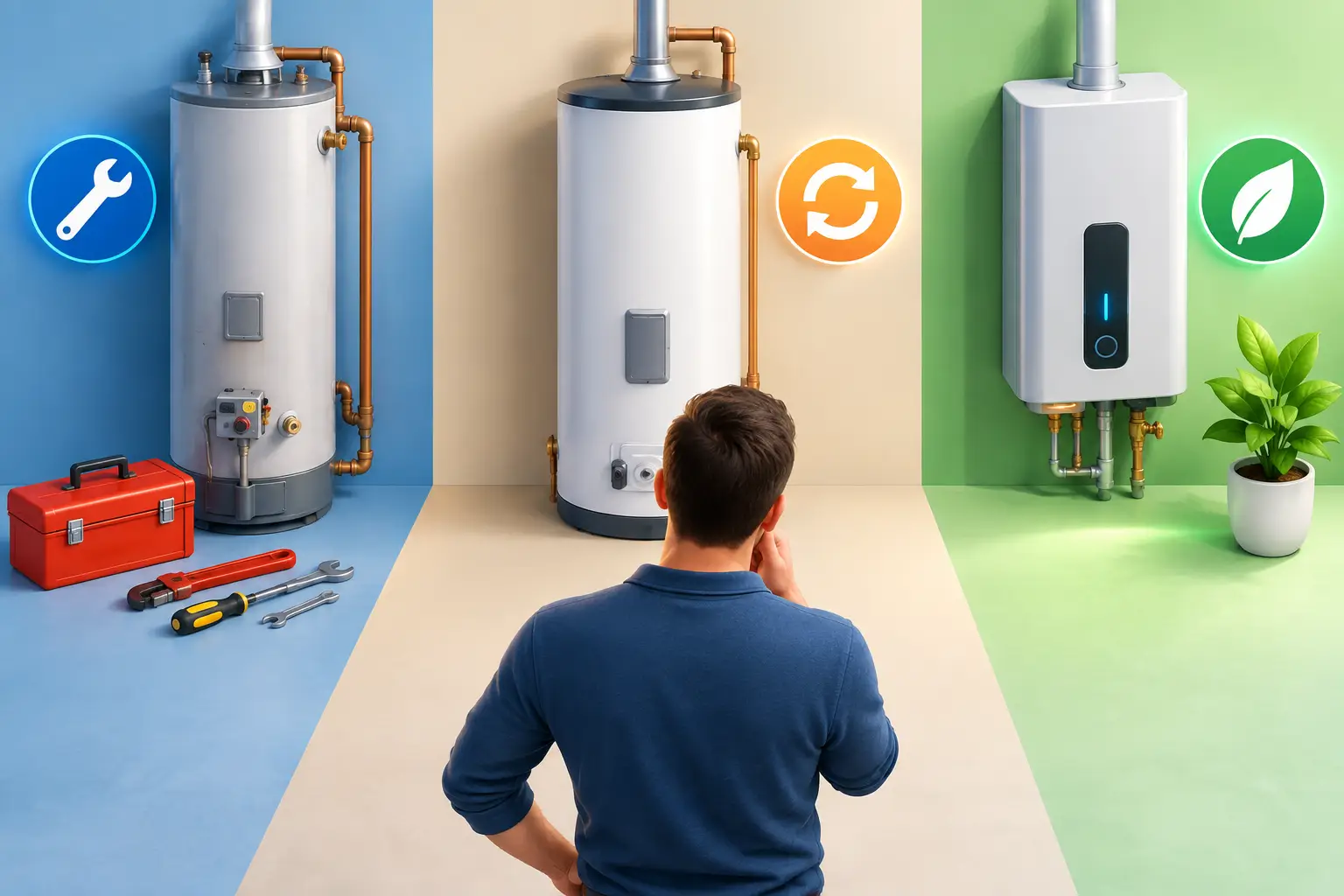
Repair or Replace? Start With the Condition
A repair often makes sense when the tank is relatively new, the issue is isolated, and there is no sign of corrosion or structural damage. For example, replacing a worn valve or defective thermostat can be far less costly than replacing the full system.
Replacement becomes more attractive when repairs are becoming frequent, the tank is near the end of its expected service life, or the available hot water no longer meets your household’s needs. A family that has added another bathroom, welcomed more people into the home, or now works from home may find that a tank size that once worked well is no longer enough.
Fuel efficiency also matters. An older gas unit may still operate, but it can use more energy than a newer high-efficiency model. In some homes, changing the equipment type can be worthwhile. The best choice depends on the fuel source, available electrical capacity, venting layout, installation space, household usage, and budget.
A clear recommendation should explain these trade-offs in plain language. You should know what the repair solves, what it does not solve, and what replacement options cost before authorizing the work.
Choosing the Right Hot Water Tank Size
Tank capacity is not a case of bigger always being better. An oversized tank can increase upfront and standby energy costs. A tank that is too small causes cold showers and frustration during busy mornings.
For many households, a 40- or 50-gallon tank is a reasonable starting point, but actual demand is more useful than household size alone. Consider whether showers run at the same time, how often baths are used, whether the home has a large soaker tub, and whether appliances such as dishwashers or washing machines are frequently operating during peak periods.
A household with two adults who stagger shower times may be comfortable with a smaller capacity than a household of four with teenagers getting ready at once. Rental properties also need careful sizing. The goal is dependable supply under normal peak use, not a system selected by guesswork.
Recovery rate matters alongside tank volume. This is how quickly the unit can heat a fresh supply of water after hot water has been used. Gas tanks generally recover faster than electric models, which can make a meaningful difference in high-demand homes.
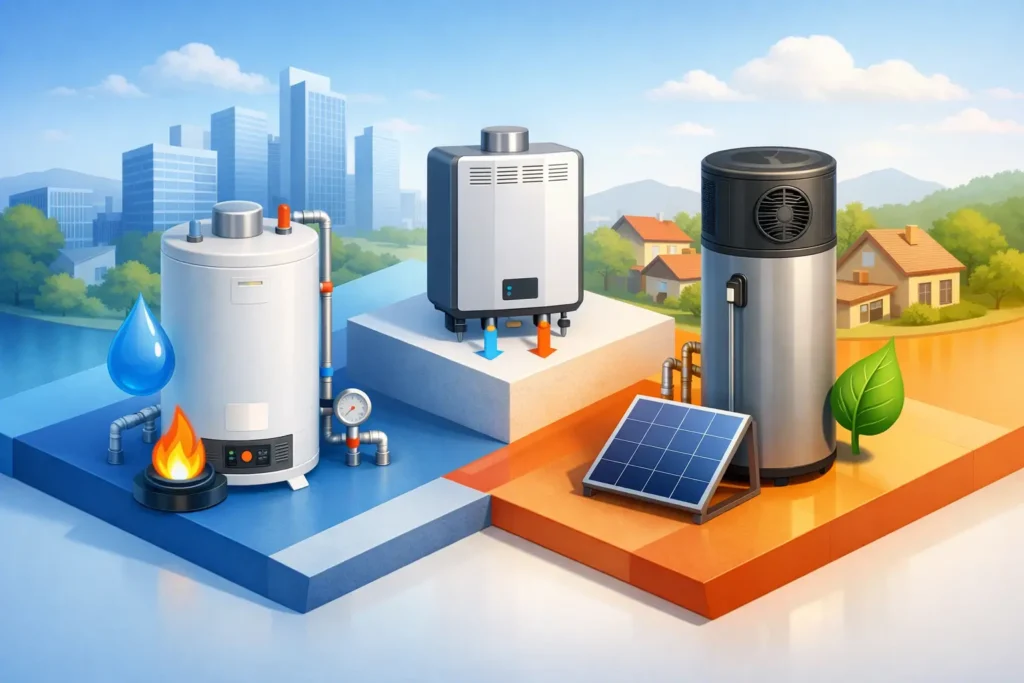
Gas, Electric, Power Vent, and Heat Pump Options
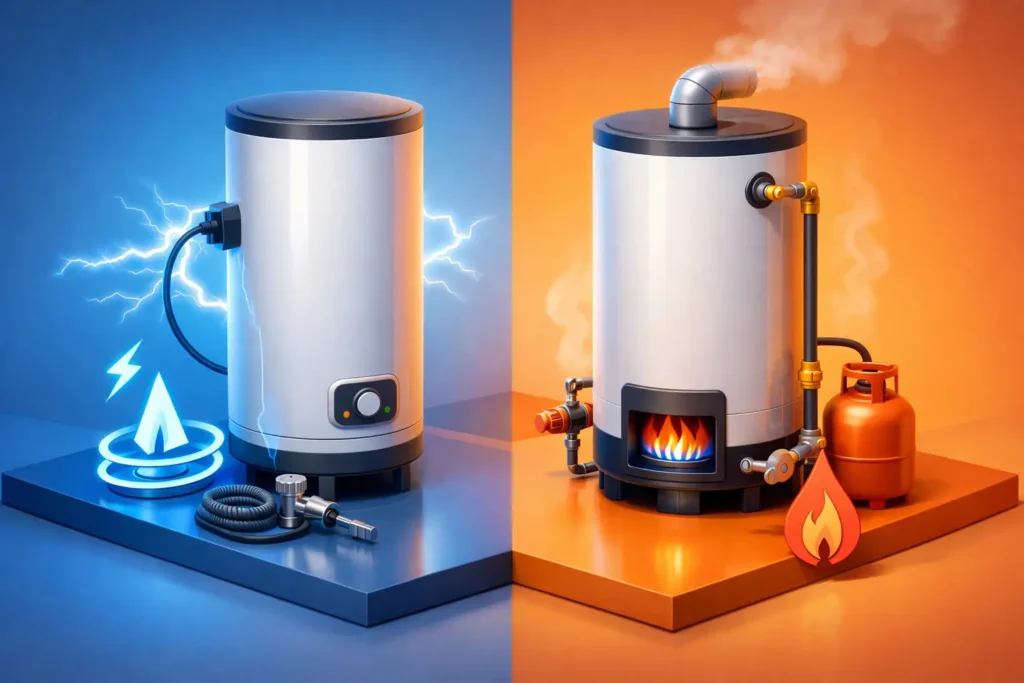
The best replacement is shaped by your home’s existing setup. A standard gas water heater is a familiar option for many GTA homes, offering strong recovery performance where proper venting is available. If the existing venting arrangement is suitable and the home has natural gas service, this can be a straightforward replacement path.
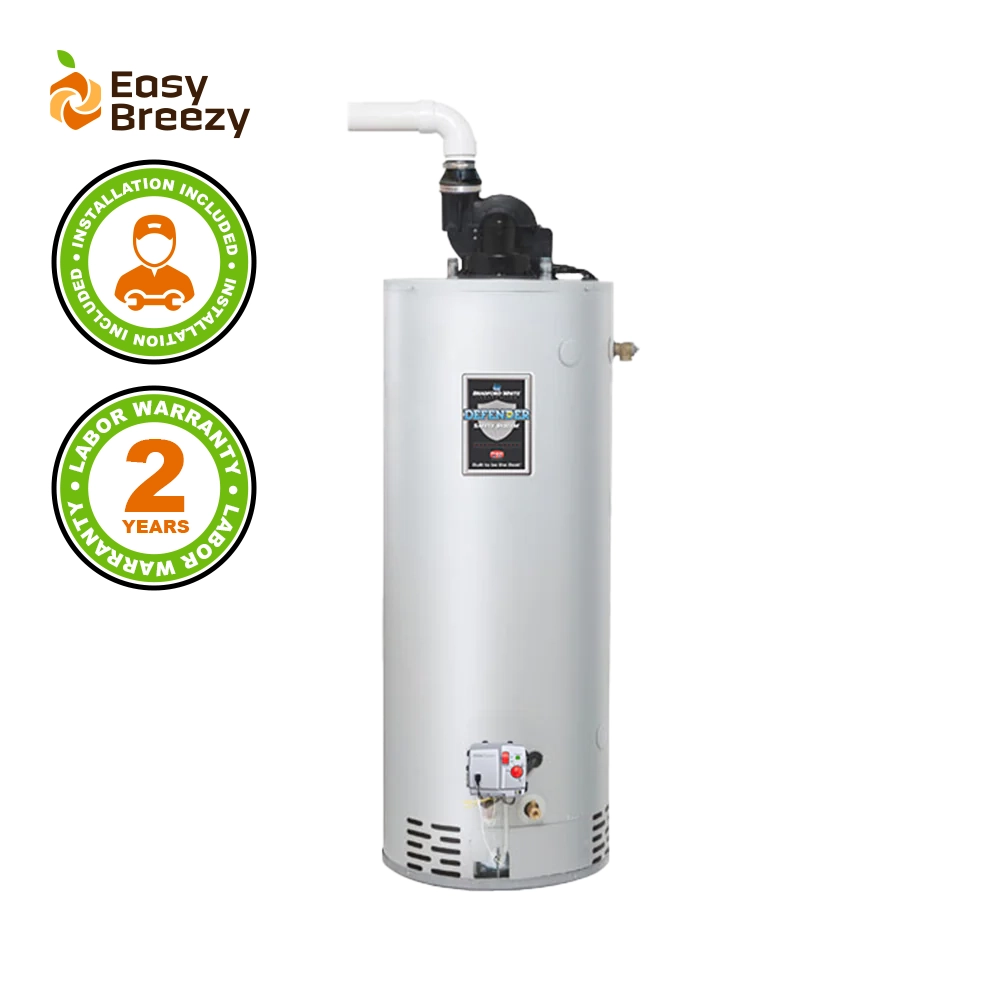
A power vent water heater uses a fan to move exhaust gases through PVC venting. It can offer more installation flexibility than a conventional chimney-vented tank, but it requires electricity and careful venting design. During a power outage, the unit will not operate, which is worth considering for homes where backup power is limited.
Electric water heaters do not require gas combustion or exhaust venting. They can be a practical choice where gas is unavailable or where a property is moving toward electrification. Their recovery rate is often slower than gas, so correct sizing is particularly important.
Heat pump water heaters use electricity to move heat from surrounding air into the water. They can be highly efficient, but they need appropriate installation space and work best in locations that can accommodate cooler, dehumidified air. A utility room, basement, or garage may be suitable depending on the property. They are not automatically the best answer for every home, especially where space, noise, or seasonal room temperature creates limitations.
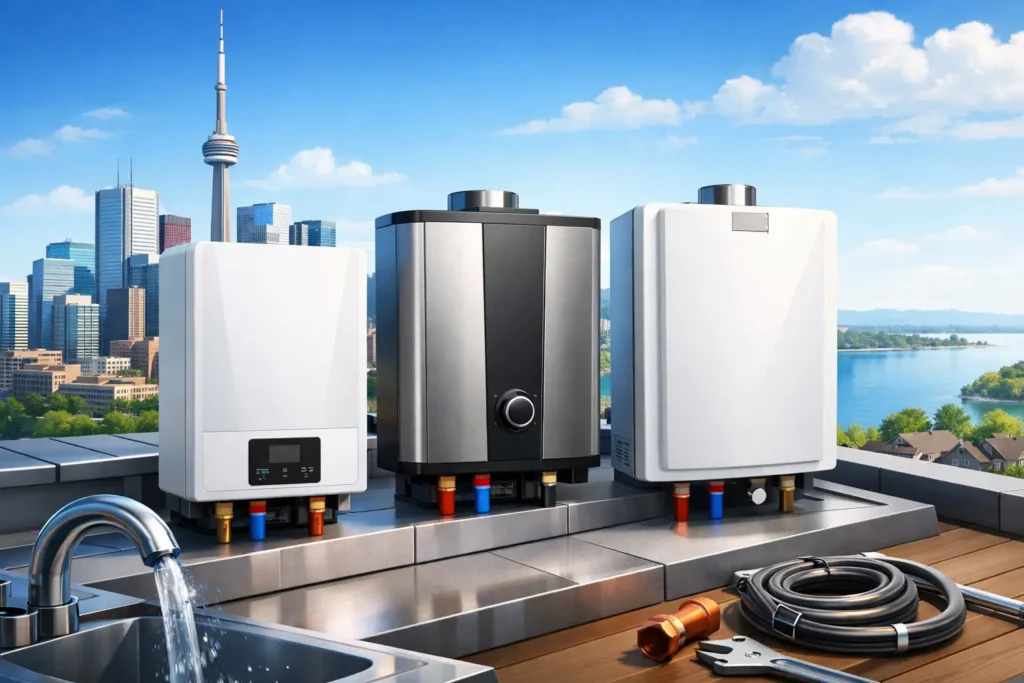
Tankless water heaters are another option, although they are not hot water tanks. They heat water on demand and can provide a continuous supply when properly sized. However, their installation requirements and initial cost may be higher, and the right model depends heavily on simultaneous hot-water demand. A homeowner who wants long back-to-back showers may benefit, while another may find a modern storage tank delivers better value.
Installation Details That Affect Performance
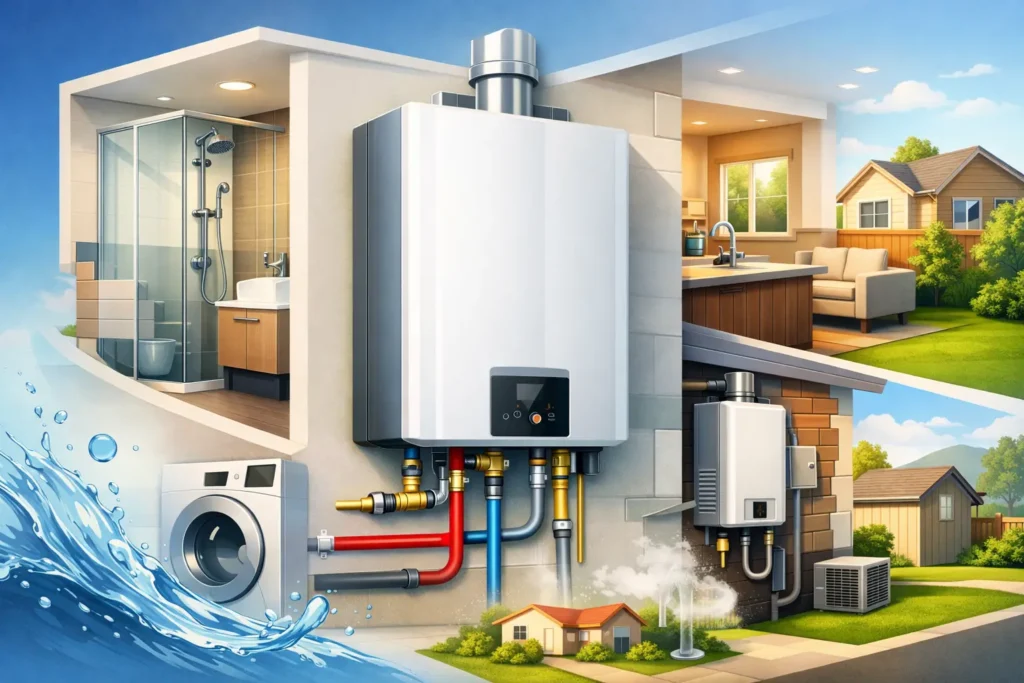
The equipment model is only one part of a reliable hot-water system. Proper installation affects safety, efficiency, and how long the unit lasts. Gas connections, venting, drainage, electrical work, combustion air, shutoff valves, expansion considerations, and code requirements all need to be assessed for the specific property.
This is especially relevant when replacing an older system. Current installation standards may differ from those in place when the original tank was installed. A new unit might require venting changes, electrical updates, or adjustments to the surrounding plumbing. Transparent pricing should account for the scope of a standard installation and clearly identify any site-specific work required before the job proceeds.
For condo units, commercial spaces, and multi-unit properties, access and building rules can add another layer of planning. Equipment location, elevator booking, drainage protection, and permitted work hours can influence timing and cost. Addressing those details in advance prevents unnecessary delays on installation day.
Simple Steps That Help a Tank Last Longer
Routine attention can reduce the risk of surprise failures, although it cannot reverse internal corrosion. Periodic inspection can catch minor leaks, venting concerns, or valve issues before they become larger problems. Keeping the area around the tank clear also makes it easier to spot changes and allows technicians safe access for service.
Where appropriate, flushing sediment from the tank may help maintain performance. The anode rod, a component designed to corrode before the tank lining does, can also be inspected and replaced on some units. Whether this is worthwhile depends on the age and condition of the tank. On a heavily corroded older unit, aggressive maintenance can occasionally expose an existing weakness, so professional assessment is sensible.
Do not ignore a pressure-relief valve that drips, a pilot that repeatedly goes out, or a sudden increase in utility costs. These are not always emergencies, but they are good reasons to arrange service before the system stops producing hot water altogether.
Get a Clear Answer Before the Tank Fails
When your water heater starts showing its age, the most useful next step is not guessing at a model or waiting for a complete breakdown. Have the system assessed, ask for a direct explanation of the issue, and compare repair costs with replacement options that fit your home.
Easy Breezy HVAC helps homeowners across Toronto and the GTA make that decision with certified service, visible equipment choices, and straightforward installation pricing. Whether the answer is a targeted repair or a planned replacement, acting before a small issue becomes a flooded utility room gives you more control over cost, timing, and comfort.