A heat pump replacement can look expensive beside a standard air conditioner or furnace replacement. The useful question is not simply, “Will it lower my bill?” It is how much it may save in a home like yours, after accounting for insulation, fuel prices, system sizing, and the way your family uses heating and cooling. This heat pump savings case study uses a representative GTA household to show the numbers in practical terms.
The figures below are illustrative rather than a promise of a specific bill reduction. Utility rates change, homes vary widely, and a heat pump only performs as well as the design and installation behind it. Still, working through a realistic example helps turn a broad efficiency claim into a better replacement decision.
The home and the equipment being replaced
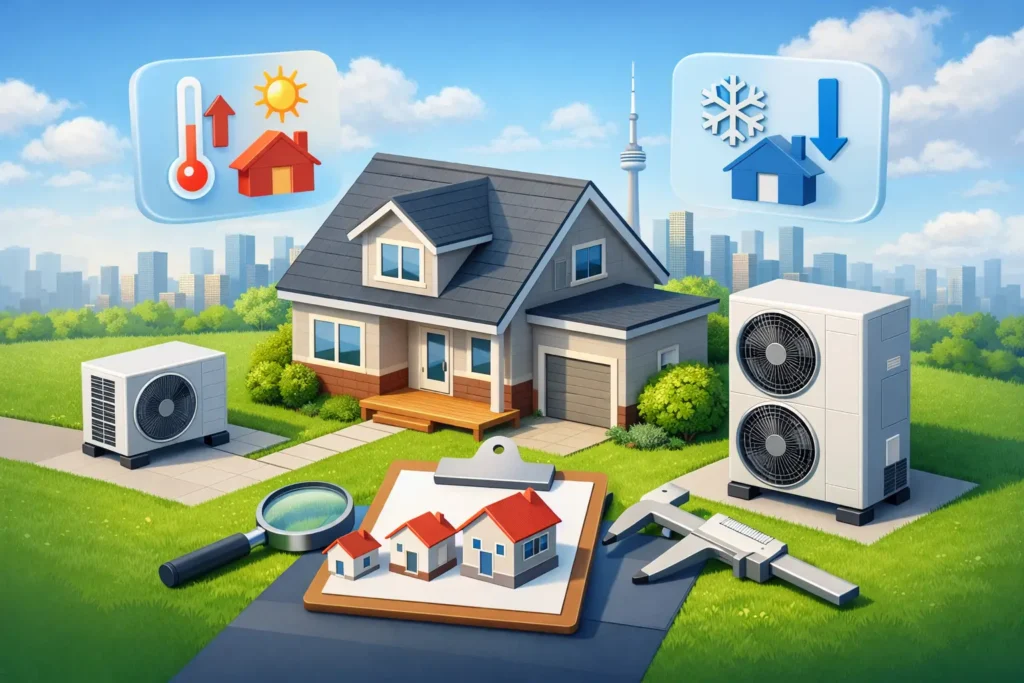
Our example is a detached, approximately 2,000-square-foot home in the GTA. It was built in the early 1990s, has average attic insulation, double-pane windows, and a finished basement. The family of four keeps the thermostat at 21 C in winter and 24 C in summer.
The existing equipment included a 20-year-old natural gas furnace rated at about 80% efficiency and a 15-year-old central air conditioner. The air conditioner still ran, but cooling was uneven upstairs and repairs were becoming more frequent. The furnace was reliable enough to finish the season, yet its age made a planned replacement more sensible than waiting for a winter failure.
Over the previous 12 months, the home used roughly 2,100 cubic metres of natural gas for space heating, hot water, and cooking. To keep the comparison focused, we estimated that 1,600 cubic metres were tied to space heating. Summer electricity used for air conditioning was estimated at 1,250 kWh.
This is an important starting point. A heat pump does not eliminate all gas use in every home. If the water heater, fireplace, stove, or dryer still uses gas, those charges remain. Looking only at the total gas bill can make the savings appear smaller than the actual heating savings.
The replacement plan
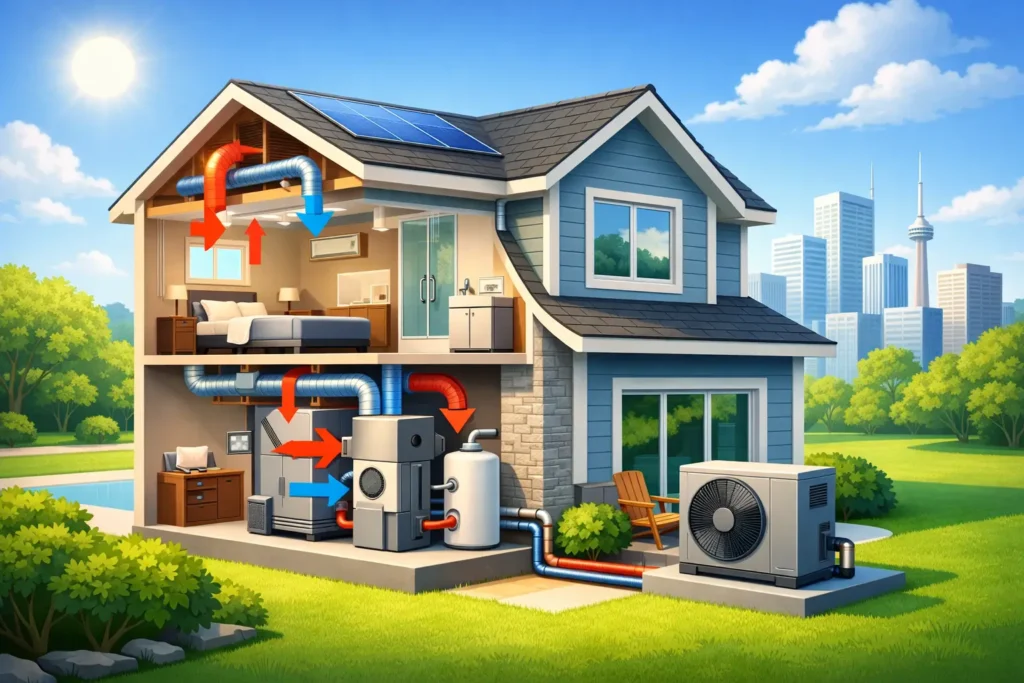
After a load calculation and ductwork review, the recommended setup was a cold-climate air-source heat pump paired with a high-efficiency gas furnace. This dual-fuel arrangement gives the homeowner efficient electric heating for much of the season, while retaining gas backup for very cold conditions and providing dependable airflow through the existing duct system.
The heat pump was selected to handle the home’s cooling needs and a substantial portion of its heating load. The furnace was not oversized simply because it would serve as backup. Correct sizing matters: an oversized system can short-cycle, create temperature swings, and reduce the savings homeowners expect.
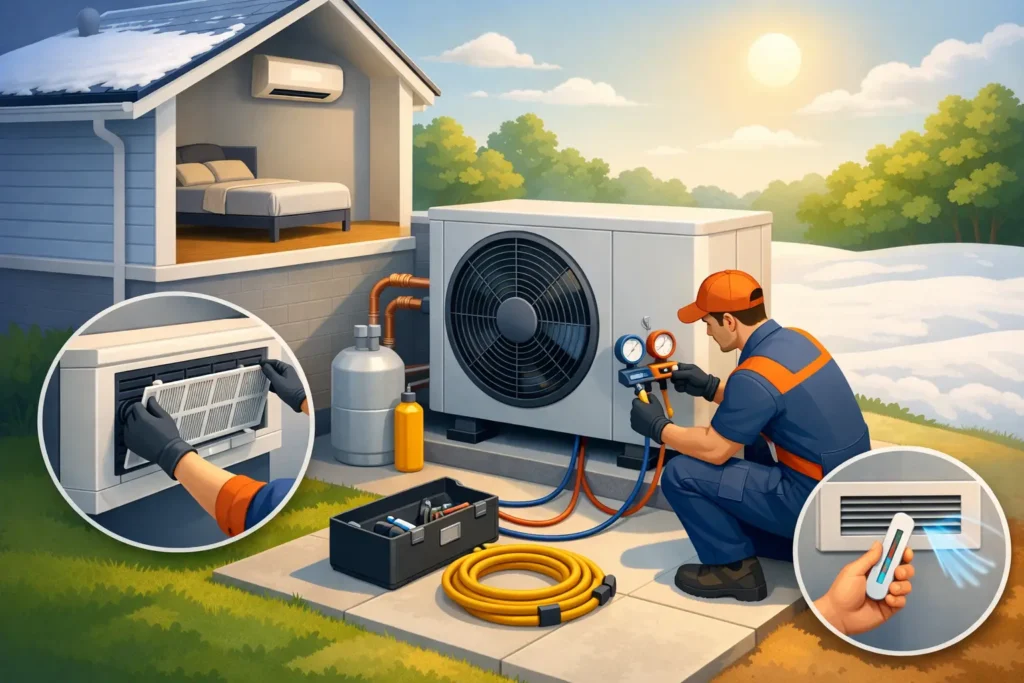
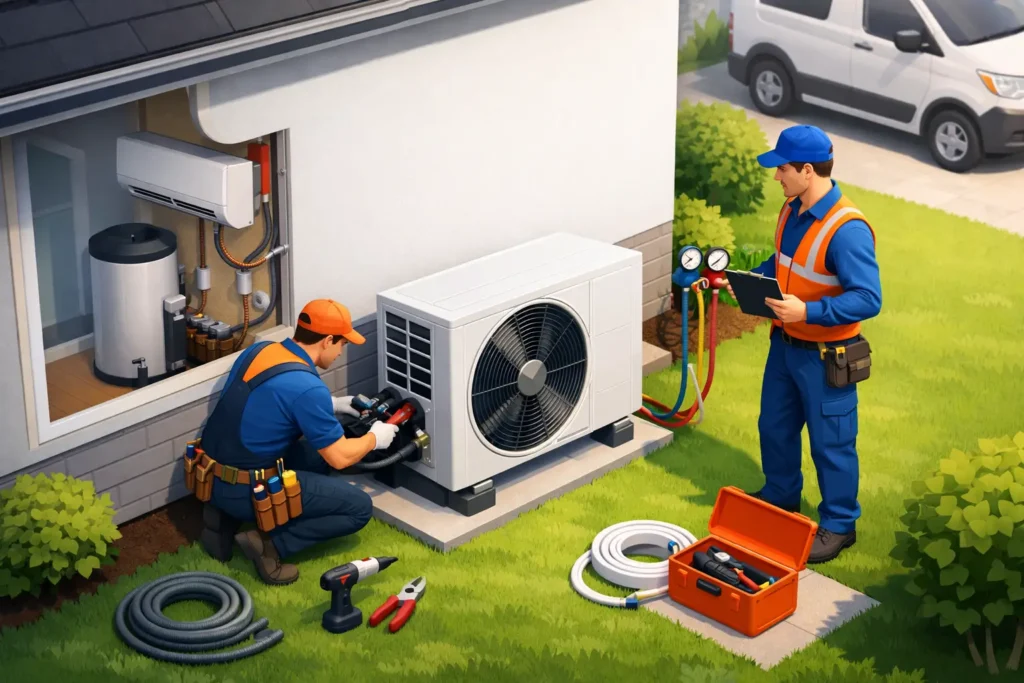
The installation also included a new compatible thermostat, outdoor unit pad, refrigerant line work, electrical adjustments, and commissioning. Small details such as refrigerant charge, airflow, defrost settings, and duct condition are not extras. They affect comfort, capacity, and operating cost every day.
Heat pump savings case study: the first full year
For this example, we compared the estimated operating cost of the old furnace and air conditioner with the new dual-fuel system over a full year. The calculation used representative delivered energy prices, including electricity delivery costs and natural gas charges. Actual rates in Toronto and surrounding municipalities differ by provider, plan, and billing period.
With the older 80% furnace, delivering the required amount of heat required approximately 1,600 cubic metres of gas. At an all-in estimated cost of $0.48 per cubic metre, space heating cost about $768 for the year.
The old air conditioner added approximately $225 in summer electricity cost. Total annual heating and cooling operating cost was therefore around $993.
After installation, the heat pump supplied most heating during milder weather and throughout much of the shoulder season. The gas furnace took over during the coldest periods, based on the selected changeover temperature and the relative cost of gas and electricity. The household used an estimated 5,150 kWh for heat pump heating and cooling combined, at an all-in electricity cost of about $0.19 per kWh. That worked out to roughly $979.
The backup furnace used about 410 cubic metres of gas for the coldest weather, costing approximately $197. The new annual heating and cooling total was about $1,176.
At first glance, that is not a savings result. It is a realistic reminder that a heat pump does not automatically beat gas on operating cost in every GTA home or under every rate structure. Electricity pricing, gas pricing, system efficiency, and winter temperatures determine the outcome.
But the homeowner was not buying heating alone. The heat pump replaced an aging central air conditioner at the same time. When the comparison is made against replacing the old furnace and air conditioner with separate new equipment, the picture changes. A new high-efficiency furnace plus a new standard air conditioner would have reduced gas use and cooling electricity, but it would not have provided the same electrification option or reduced exposure to future gas price increases.
In this scenario, the immediate annual utility cost was modestly higher than the old system, but the homeowner gained a new cooling system, a more efficient furnace, improved summer comfort, and the ability to adjust the dual-fuel changeover point as energy prices change. This is why honest heat pump planning must look beyond one headline savings number.
When the savings can be stronger
The case above is deliberately conservative. Savings tend to improve when a heat pump replaces electric resistance heating, oil, propane, or an older and inefficient gas furnace. They can also improve in homes with lower electricity rates, better insulation, a well-sealed building envelope, and a system designed for the actual heating load.
For example, a GTA home that uses electric baseboards may see significant winter savings because a heat pump moves heat rather than creating it directly. A heat pump can deliver several units of heat for each unit of electricity it consumes under suitable conditions. That is very different from electric resistance equipment, where one unit of electricity generally produces about one unit of heat.
A homeowner replacing an old air conditioner can also assign part of the heat pump cost to the cooling upgrade they already need. That gives a clearer view of the added cost of heat pump heating, rather than treating the entire project as a heating expense.
What can reduce the expected result
A heat pump is not a cure for heat loss. If a home has major air leaks, under-insulated attic space, poorly balanced ducts, or rooms that are difficult to heat now, those problems should be identified before selecting equipment. Installing a larger unit is rarely the right fix.
Thermostat habits also matter. Deep overnight setbacks may not suit every heat pump setup because recovery can require more energy or trigger backup heat. A steady indoor temperature often works better, though the right approach depends on the equipment and control settings.
In a dual-fuel system, the changeover temperature deserves careful attention. Setting it too high may use more gas than necessary. Setting it too low may force the heat pump to operate when electricity costs more than gas for the heat delivered. A qualified technician can set up controls based on the equipment, home, and local energy costs rather than relying on a generic default.
How to estimate your own savings
Start with 12 months of gas and electricity bills, then identify which gas appliances serve your home. If possible, compare summer gas use with winter use to estimate the portion related to space heating. Next, consider the age and efficiency of your current furnace and air conditioner, not just their repair history.
A proper estimate should also include a load calculation, duct assessment, equipment efficiency ratings, electrical capacity, and the installation scope. Ask whether the proposal is for a heat pump only, a dual-fuel system, or a fully electric setup. Each option has different upfront costs, winter operation, and savings potential.
Transparent pricing helps, but the lowest equipment price is not automatically the lowest long-term cost. Installation quality, warranty coverage, service availability, and correctly matched components protect the value of the system after installation. Easy Breezy HVAC can review the condition of your current heating and cooling equipment and explain the practical options before you commit.
If your furnace or air conditioner is nearing the end of its life, collect your recent utility bills before booking an assessment. They give your technician a better starting point and give you a clearer way to judge whether a heat pump is the right comfort and cost decision for your home.