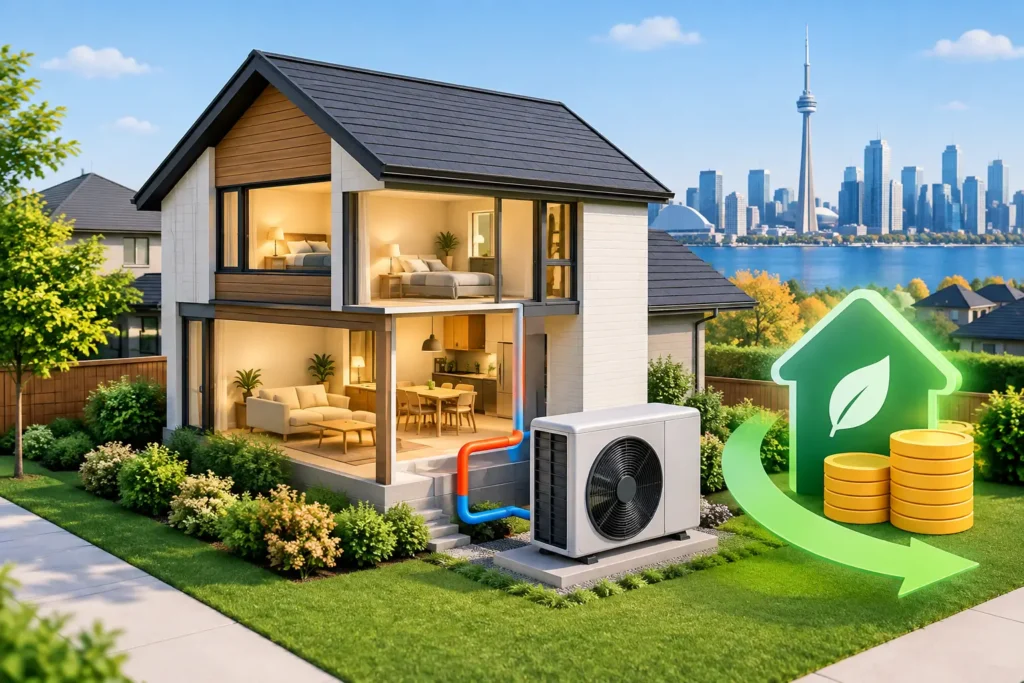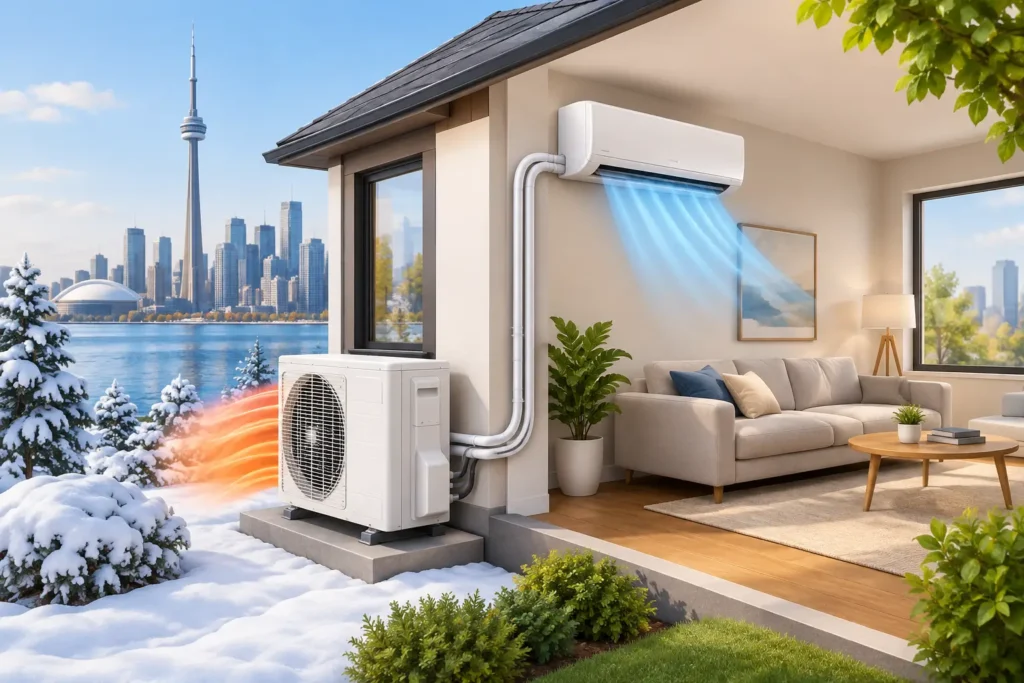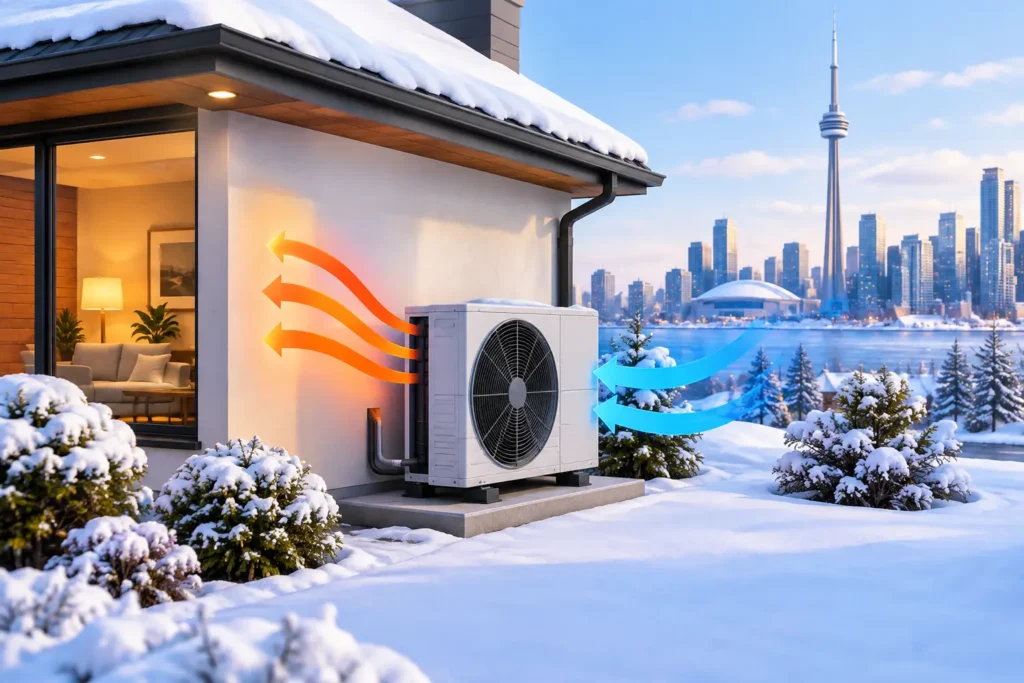
A heat pump that looks efficient on paper can still leave a GTA home feeling uneven, noisy, or expensive to heat if it is the wrong size or poorly installed. This heat pump efficiency guide focuses on the details that affect real comfort and operating costs through Toronto winters, humid summers, and the shoulder seasons in between.
For many homeowners, a heat pump is worth considering when an older air conditioner, furnace, or both are nearing replacement. It can provide cooling in summer and electric heating in cooler weather, often using less energy than electric baseboards or an older electric furnace. The best choice, however, depends on your home, existing equipment, energy rates, insulation, and how much winter heating capacity you need.
How Heat Pump Efficiency Is Measured
Heat pump efficiency is not represented by one number. Manufacturers publish different ratings because cooling and heating performance are measured differently.
SEER2 measures seasonal cooling efficiency. A higher SEER2 rating generally means the system uses less electricity to cool your home over a typical summer. It is useful when replacing an air conditioner, but it should not be the only rating driving a GTA purchase.
HSPF2 measures seasonal heating efficiency. The higher the HSPF2, the more efficiently a heat pump delivers heat over a heating season. For local homeowners, this is often the more meaningful comparison because heating demand is substantial and outdoor temperatures can drop quickly.
COP, or coefficient of performance, describes how much heat the unit produces for each unit of electricity it uses at a particular outdoor temperature. A COP of 3 means the unit delivers roughly three units of heat for every unit of electricity consumed. COP changes as temperatures fall, so ask for cold-weather performance data rather than relying on one favourable test condition.
A high rating is valuable, but it does not guarantee the lowest utility bill. A variable-speed cold-climate model may cost more upfront than a basic single-stage system. Whether the upgrade pays back depends on how long you plan to stay in the home, how much you heat with the system, and whether it replaces gas, electric resistance heat, oil, or another fuel.
Heat Pump Efficiency Guide: Start With Sizing
Oversizing is one of the most common ways to lose the benefits of a good heat pump. A unit that is too large can cycle on and off frequently during mild weather. That can reduce efficiency, create temperature swings, and remove less humidity during summer cooling.
An undersized unit can also be a problem, especially during a cold snap. It may run continuously without keeping up, relying heavily on backup heat. Continuous operation is not automatically a concern for an inverter-driven heat pump, since these systems are designed to adjust output. The concern is whether it can maintain your preferred indoor temperature at the design conditions for your home.
Proper sizing should be based on a home heat-loss and heat-gain calculation. Square footage is only one factor. A technician should also consider window area and direction, insulation levels, air leakage, ceiling height, duct condition, occupancy, and additions or renovated spaces. A 2,000-square-foot detached home in Markham can need a very different system from a 2,000-square-foot semi in Toronto.
If you have an existing furnace, do not assume its capacity identifies the right heat pump size. Older furnaces are often oversized, and their output rating is different from the actual heat your home loses.
Cold-climate capacity matters
Not every heat pump performs the same way below freezing. Some cold-climate models retain strong heating capacity at low outdoor temperatures, while others need more support from auxiliary heat. Review both the HSPF2 rating and the unit’s stated heating capacity at lower temperatures.
This matters most for homeowners hoping to use the heat pump as their primary heat source. A system that performs well at 8 C may be less suitable if it loses substantial output at -15 C. Toronto-area winters do not stay at extreme temperatures every day, but your equipment still needs a sensible plan for the coldest days.
Installation Details That Protect Performance
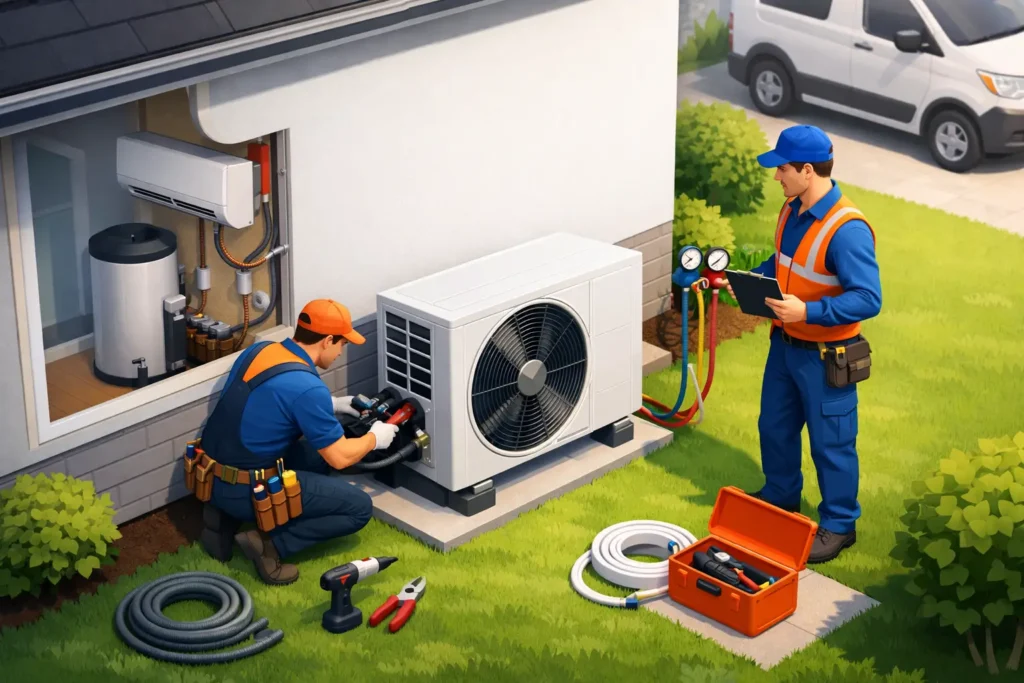
Heat pump efficiency is built during installation, not just at the factory. Even a premium system can underperform when refrigerant lines, airflow, drainage, electrical work, or controls are not set up correctly.
For ducted systems, the existing ductwork deserves close attention. Restricted return air, undersized supply runs, leaky ducts, and poorly balanced rooms can limit airflow and force the system to work harder. You may notice a hot upstairs bedroom in summer or a chilly room far from the thermostat in winter. In some homes, duct improvements or zoning are more useful than simply buying a larger unit.
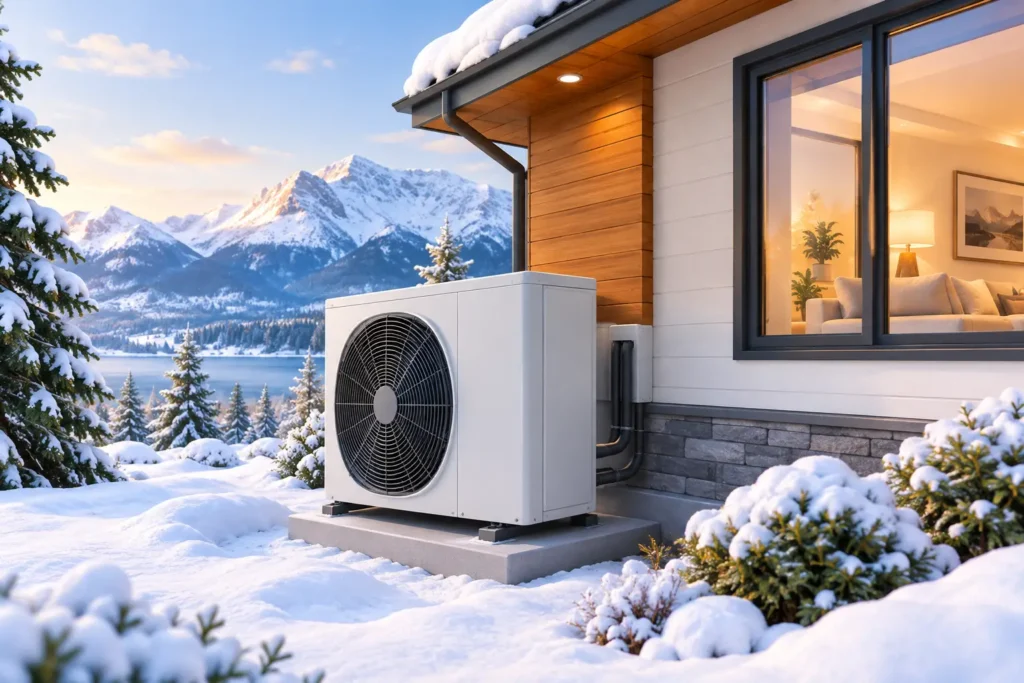
The outdoor unit needs a stable, level location with adequate clearance for airflow and service. It should also be positioned with snow, roof runoff, and ice in mind. A unit buried by drifting snow or exposed to constant meltwater cannot operate as intended. Elevating it on a suitable stand can help in locations where snow accumulation is a concern.
Refrigerant charge must be verified properly, and condensate drainage needs to be managed for both cooling and defrost operation. These are not cosmetic details. They affect capacity, reliability, and the chance of water or ice problems later.
Certified installation also matters when warranty coverage is involved. Keep your paperwork, register equipment when required by the manufacturer, and understand what labour and parts coverage apply after installation.
Get the Controls Right for Your Heating Setup
A heat pump behaves differently from a conventional gas furnace. The thermostat settings and backup heat strategy can affect how much energy you use.
If your home has a gas furnace and a heat pump, you may have a dual-fuel system. The heat pump handles heating during milder weather, while the furnace takes over below a selected balance point. There is no universal switchover temperature. The right setting depends on electricity and gas prices, heat pump capacity, furnace efficiency, and your comfort preference.
Avoid making large thermostat setbacks without understanding how your system recovers. A deep setback may cause electric auxiliary heat to activate, which can cost more than maintaining a steadier temperature. Many homes are better served by modest setbacks or a consistent schedule, particularly with a variable-speed heat pump.
Smart thermostats can help, but compatibility is essential. Some systems need specific communicating controls to access their full range of staging, modulation, and diagnostic features. Before replacing a thermostat, confirm that it will work properly with the equipment installed.
Practical Ways to Improve Heat Pump Efficiency
The heat pump can only work with the home it serves. Air leaks and weak insulation increase the amount of heat required, regardless of the model outside.
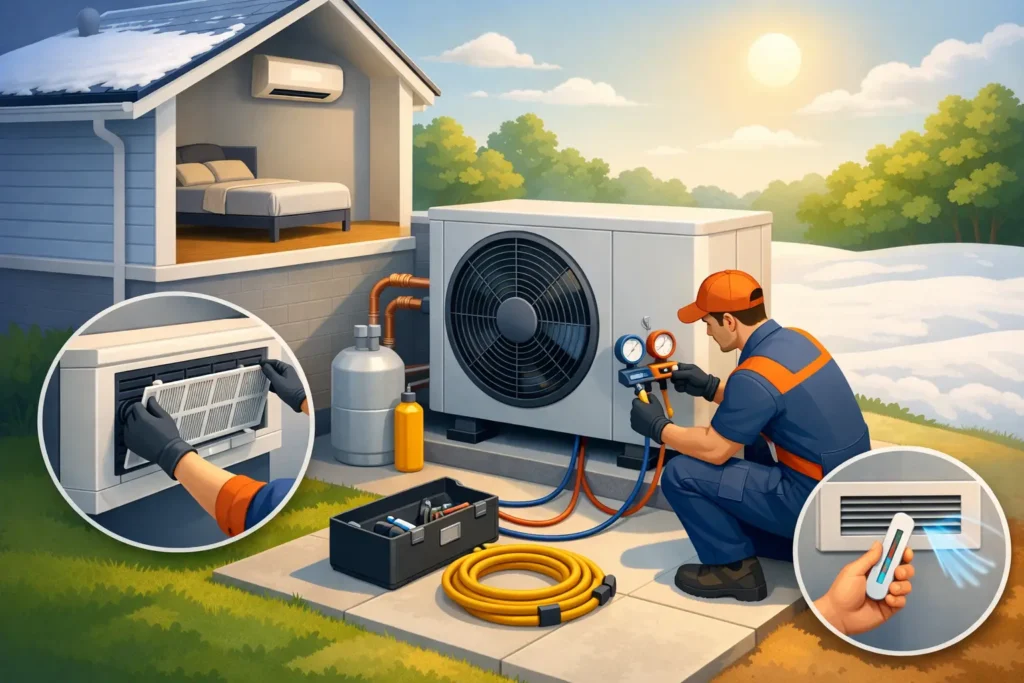
Start with easy maintenance: keep the indoor filter clean, clear leaves and debris from around the outdoor unit, and make sure supply and return vents are open and unobstructed. Do not cover the outdoor unit for winter operation. It needs free airflow, and a cover can trap moisture or interfere with defrosting.
Then look at the building itself. Air sealing around attic penetrations, weatherstripping doors, improving attic insulation, and addressing drafty windows can reduce heating demand. These upgrades may allow a heat pump to maintain comfort more easily and can improve every heating and cooling option you consider.
Book professional maintenance before the heating or cooling season, especially if the system has shown warning signs such as ice buildup, unusual noise, reduced airflow, inconsistent temperatures, or higher electricity use. A service visit can identify issues such as dirty coils, drainage concerns, electrical wear, or refrigerant problems before they become a no-heat call.
When a Heat Pump Is Not the Simple Answer
Heat pumps are a strong option for many GTA homes, but they are not automatically the best fit in every situation. A home with major insulation gaps, failing ductwork, or a very limited electrical panel may need other work first. In another case, a high-efficiency furnace replacement may make more financial sense if the air conditioner is still relatively new.
Ductless heat pumps can be practical for additions, converted garages, homes with difficult duct layouts, or rooms that never feel comfortable. They can be very efficient, but indoor unit placement matters. One wall-mounted head does not always distribute heat evenly through several closed rooms.
The right recommendation should explain the trade-offs clearly: equipment cost, installation scope, expected operating approach, backup heat, maintenance needs, and available space. A lower-priced system may be the better decision when it fits the home’s needs well. A higher-efficiency cold-climate unit can be the better investment when the home will rely on it heavily for heating.
When you are comparing options, ask for the actual model numbers, installed scope of work, efficiency ratings, warranty details, and any work needed to support the equipment. Easy Breezy HVAC helps homeowners make those comparisons with clear explanations before installation begins. The goal is not the highest rating on a brochure. It is dependable, year-round comfort that makes sense for your home and budget.