A second-floor bedroom that stays hot in summer and chilly in winter is one of the clearest reasons to consider a ductless system. This ductless heat pump review looks past the marketing claims and focuses on what homeowners in Toronto and the GTA need to know: where these systems perform well, where they have limits, and what makes an installation worth the investment.
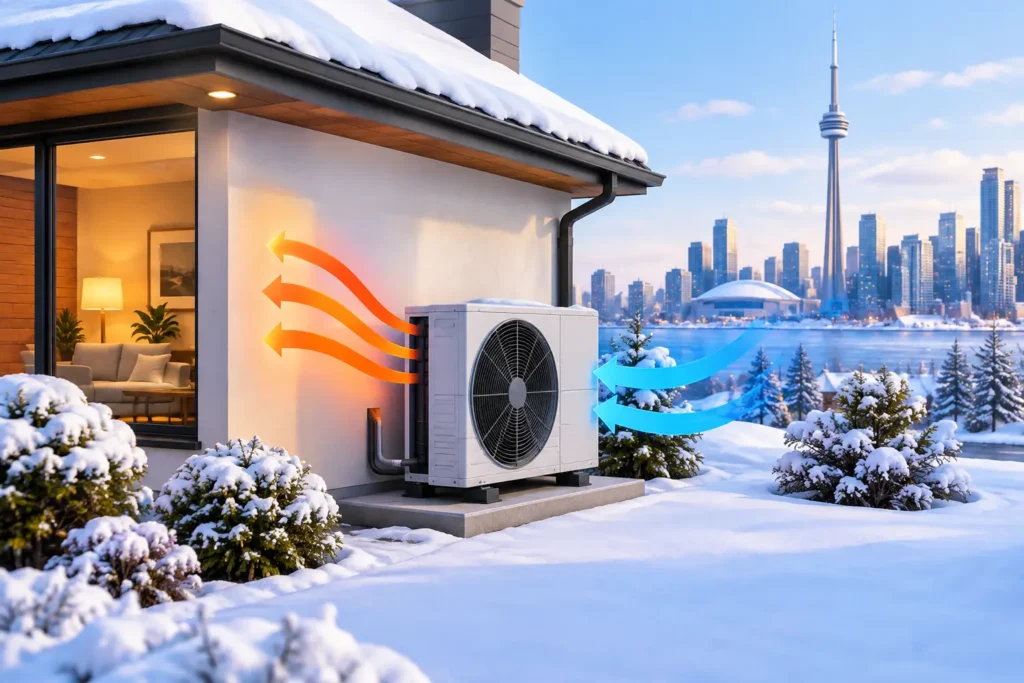
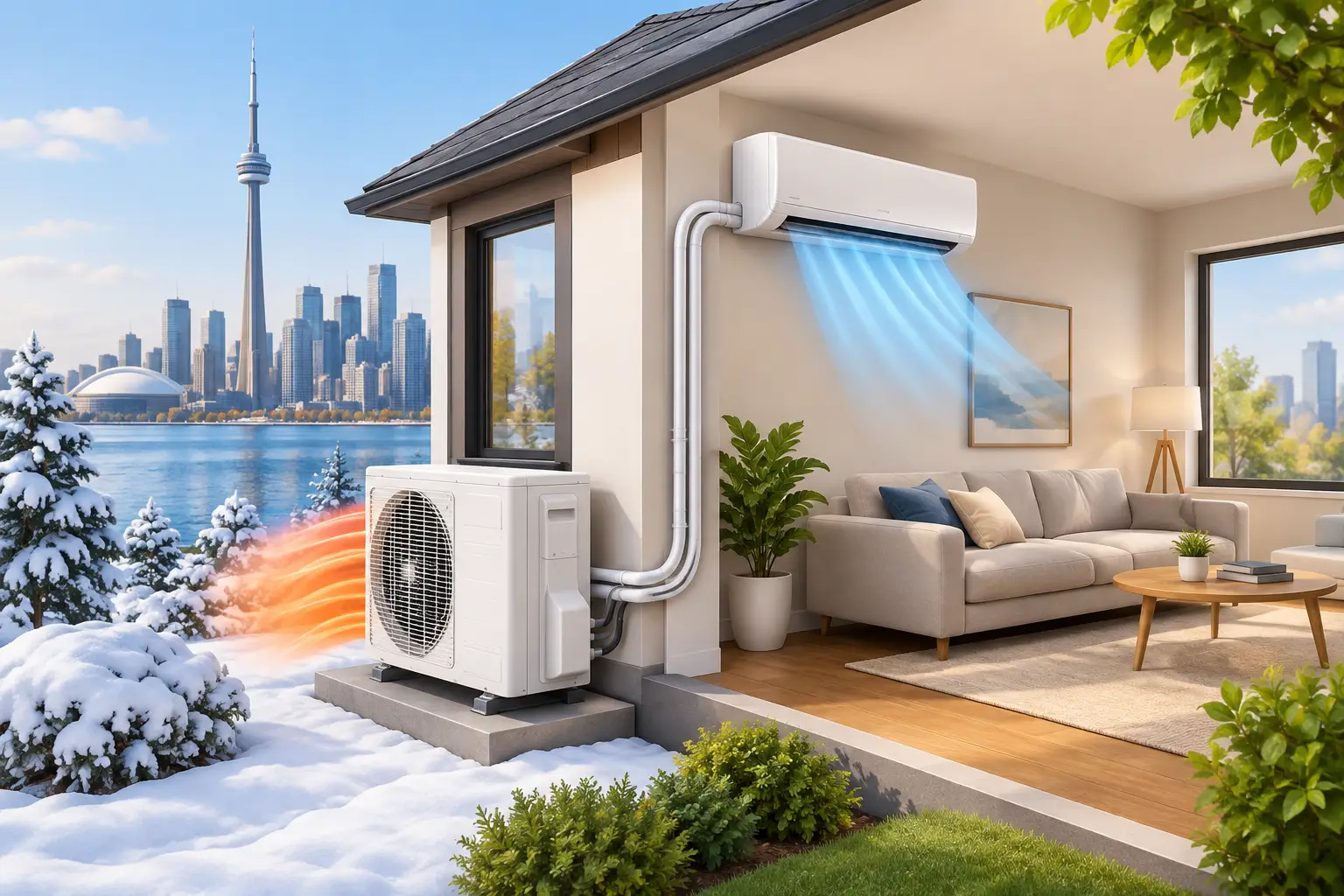
A ductless heat pump, often called a mini-split, moves heat rather than creating it through combustion. One outdoor unit connects to one or more indoor air handlers through small refrigerant lines. Each indoor unit can be controlled separately, allowing you to heat or cool a specific room, floor, addition, or small suite without extending existing ductwork.
That flexibility is the biggest advantage, but it does not automatically make ductless equipment the right answer for every home. The equipment choice, system sizing, and installation details matter just as much as the unit’s efficiency rating.
Ductless heat pump review: where it earns its keep
Ductless heat pumps are especially effective in homes with rooms that existing heating and cooling systems do not serve well. Finished basements, attic conversions, sunrooms, additions, garages, and older homes without central ducts are common examples. Instead of opening walls and ceilings to add ductwork, a properly placed indoor head can provide direct comfort to the space that needs it.
They also work well for zoning. A family may keep bedrooms cooler at night while maintaining a comfortable temperature in living areas during the day. Because each indoor head has its own thermostat and fan, you are not forced to condition every room the same way. That can improve comfort and reduce wasted energy in rooms that are rarely used.
In cooling season, ductless systems are often a noticeable upgrade over window air conditioners. They are quieter, do not block a window, and generally remove humidity more effectively. The indoor unit runs at lower, steadier speeds rather than switching fully on and off as often as older equipment. That steady operation can make a room feel more consistently comfortable.
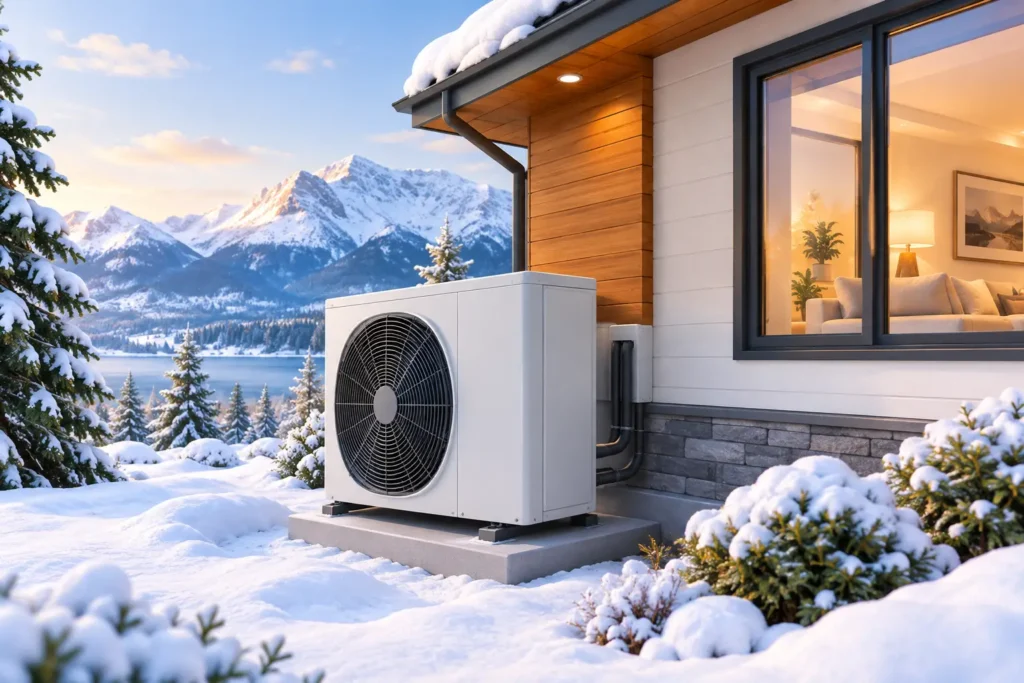
For heating, a cold-climate ductless heat pump can provide efficient warmth through much of a GTA winter. Modern models are designed to operate at low outdoor temperatures, but capacity and efficiency decrease as the temperature falls. That is why a good review of any proposed system should include its heating output at low temperatures, not only its advertised maximum capacity.
The winter question: can it replace a furnace?
Sometimes, but not always. This is where clear advice matters more than a simple yes or no.
A ductless heat pump may be able to heat a well-insulated condo, a newer small home, or a carefully designed all-electric property as the primary heat source. In many detached GTA homes, however, it is more practical as a supplement to an existing gas furnace or as a solution for specific areas. The furnace can provide backup heat during extreme cold, while the heat pump handles a large share of heating during milder weather.
A dual-fuel approach can be a sensible choice for homeowners replacing an air conditioner but keeping a reliable furnace. The heat pump provides efficient cooling and heating, and the furnace takes over when outdoor conditions reach the selected balance point. The correct setting depends on the equipment, electricity and gas costs, insulation levels, and household comfort expectations.
Do not judge winter performance by brand name alone. Ask for the model’s rated heating capacity at low temperatures and confirmation of whether supplemental heat is needed for the rooms being served. A system that looks oversized based on cooling capacity may still have limited heating output during the coldest days.
What comfort feels like in a real home
The best ductless systems are quiet and unobtrusive once installed, but indoor head placement has a direct effect on comfort. Air needs a clear path to circulate through the room. A head mounted above a doorway or on a wall facing a large open area usually performs better than one blocked by furniture, bulkheads, or a tall bookcase.
A single wall-mounted head can be excellent for an open-concept main floor or a large bedroom. It may not distribute heat evenly through several closed rooms, long hallways, or a multi-level layout. In those situations, adding heads or considering a ducted heat pump arrangement may provide a better result.
Some homeowners worry that an indoor unit will look industrial. Wall-mounted units are visible, and that trade-off should be discussed honestly before installation. There are alternatives, including ceiling cassettes and concealed ducted indoor units, but these can require more construction work and add cost. The least expensive layout is not always the cleanest-looking or most even-heating option.
Installation quality matters as much as the equipment
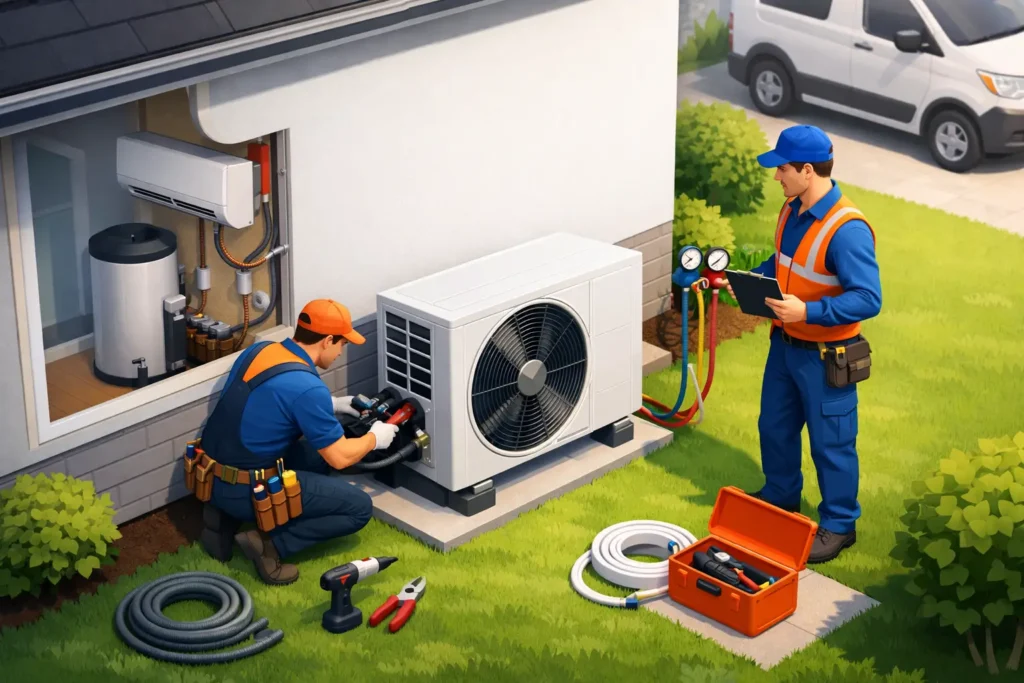
A ductless heat pump is not a plug-in appliance. The outdoor unit needs a stable base, proper clearances, safe electrical supply, drainage planning, and a location that allows future service. The indoor unit needs a route for refrigerant lines, communication wiring, and condensate drainage. In cold weather, outdoor-unit placement and drainage become even more important because defrost cycles produce water that can freeze if it is not managed properly.
The line set should be sized and routed according to the manufacturer’s requirements. The installer must pressure-test the system, evacuate moisture and air from the refrigerant lines, verify operation, and explain how to use the controls. Skipping those steps can lead to poor performance, leaks, water issues, or a shorter equipment life.
Electrical capacity also deserves attention. A heat pump may require a new dedicated circuit or panel work. In a condo, there may be rules around outdoor unit placement, noise, drainage, and approval. For rental properties, owners should consider how individual room controls will be managed and who will maintain filters.
A clear installation quote should identify the equipment model, number of indoor heads, expected line-set routing, electrical scope, condensate solution, and what is included in labour and warranty coverage. If a quote seems unusually low, confirm whether it includes the parts and finishing work required for a complete installation.
Costs and operating savings depend on the job
There is no reliable single price for a ductless heat pump because installations range from one head serving a bedroom to multi-zone systems covering most of a home. Equipment capacity, efficiency level, line-set length, electrical upgrades, wall construction, and access all affect the final installed cost.
Operating savings also depend on what the heat pump replaces. Replacing electric baseboard heat in selected areas can produce significant savings. Replacing a newer high-efficiency gas furnace throughout an entire house is a more nuanced calculation. A heat pump may still lower cooling costs and improve room-by-room comfort, but the heating savings should be assessed using your actual energy use rather than broad promises.
Rebates can help when available, but they should not be the only reason to choose a system. Programs change, eligibility rules vary, and some rebates require specific equipment or documentation. Choose a system that works for the home first, then confirm any current incentive requirements before work begins.
Maintenance is simple, but it is not optional
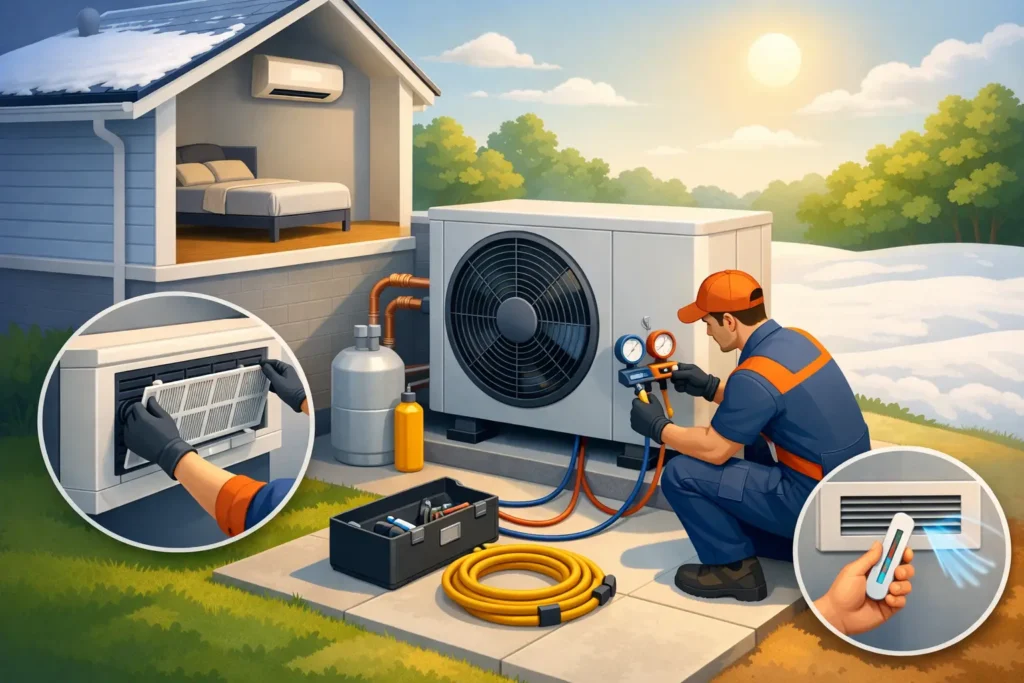
Homeowners can handle the most frequent task: cleaning the indoor filters. During heavy use, check them monthly and clean them as needed. A blocked filter reduces airflow, makes the system work harder, and can affect heating and cooling performance.
Keep the outdoor unit free from leaves, snow buildup, ice, and stored items. Do not build a tight enclosure around it. The unit needs open airflow, and restricted clearance can cause performance problems. A professional maintenance visit can check refrigerant operation, electrical connections, coil condition, drains, and overall heating and cooling output.
Is a ductless heat pump noisy?
Most indoor units are very quiet at normal fan speeds, which makes them well suited to bedrooms and home offices. Outdoor sound levels vary by model and installation location. If the unit will sit near a neighbour’s property line, bedroom window, or patio, ask about sound ratings and placement before selecting the equipment.
How many indoor heads do you need?
The answer depends on the home’s layout, not just square footage. One head may serve a large open area well, while separate closed bedrooms often need their own heads or another distribution method. More heads offer more control, but they also increase upfront cost and maintenance points.
Can a ductless unit heat and cool at the same time?
Most residential multi-zone systems operate in either heating or cooling mode across all connected heads. One room can be set warmer or cooler than another, but the system cannot usually provide cooling in one room while heating another at the same time. This matters in shoulder seasons when different parts of a home have different needs.
Before choosing a ductless heat pump, start with the rooms you actually want to improve, the way your family uses them, and the backup heat already in place. A certified technician can assess the layout, electrical requirements, and winter heating load so the recommendation fits your home instead of forcing your home to fit the equipment.