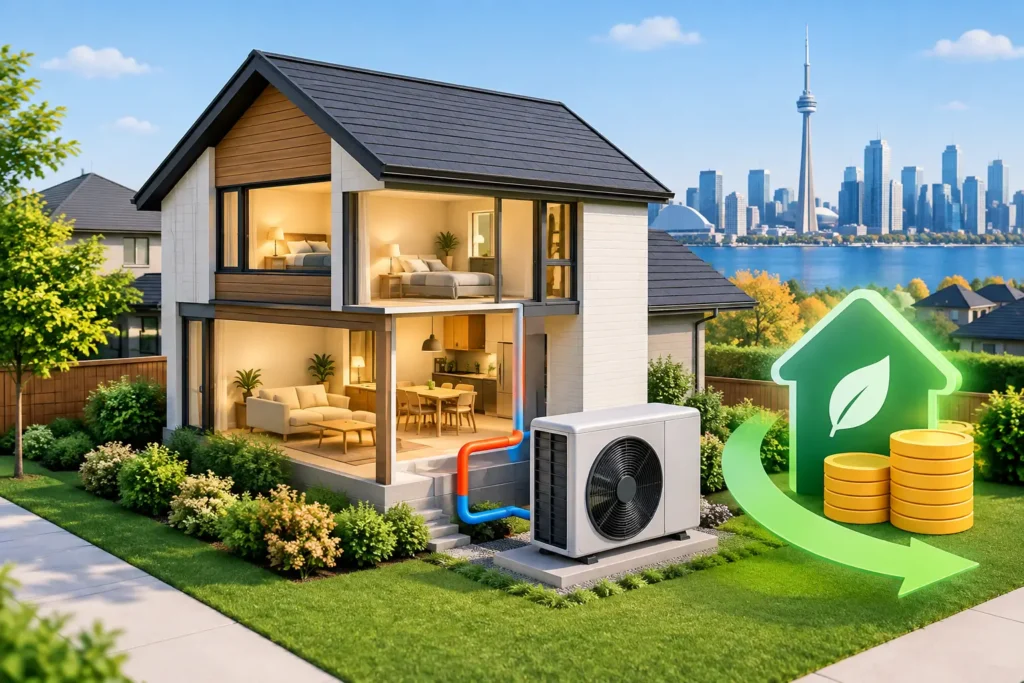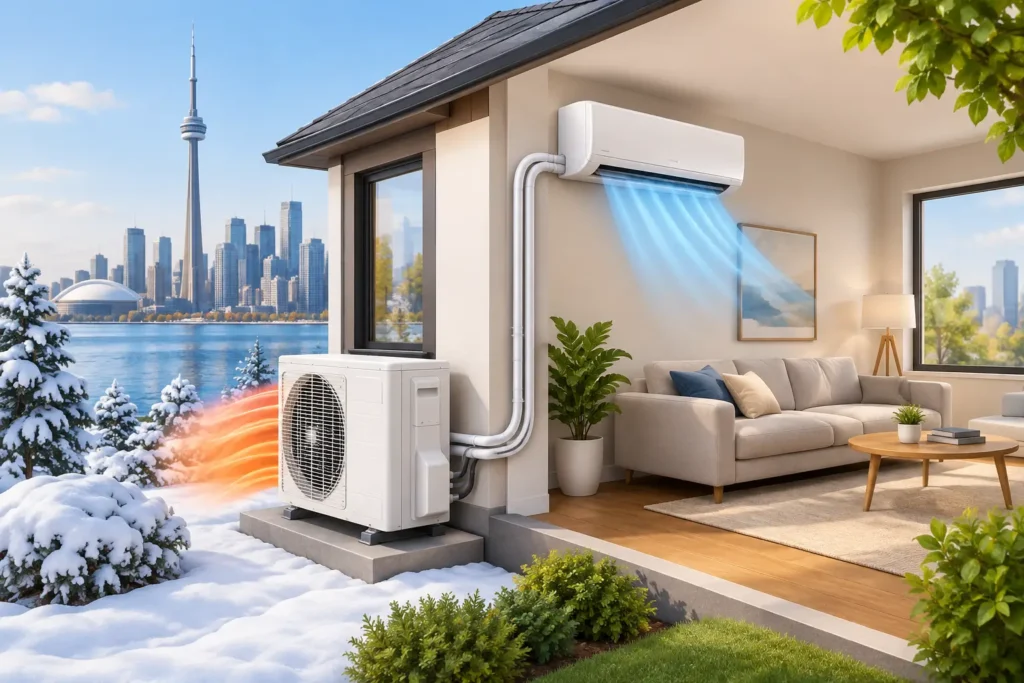
A Toronto winter is a serious test for any heating system. When the temperature drops well below freezing and the wind picks up, homeowners need more than a heating promise. They need dependable warmth in every room. So, can heat pumps work through Toronto winters? Yes – when the system is properly selected, correctly installed, and matched to the home.
Modern cold-climate heat pumps are very different from the older models many homeowners remember. They can pull usable heat from outdoor air even in sub-zero temperatures, then move that heat indoors. That makes them a practical option for many homes across Toronto and the GTA, including Mississauga, Brampton, Vaughan, and Markham.
The key is understanding what a heat pump can do, where its limits are, and whether it is the right fit for your particular home.
Can Heat Pumps Work When It Is Below Freezing?
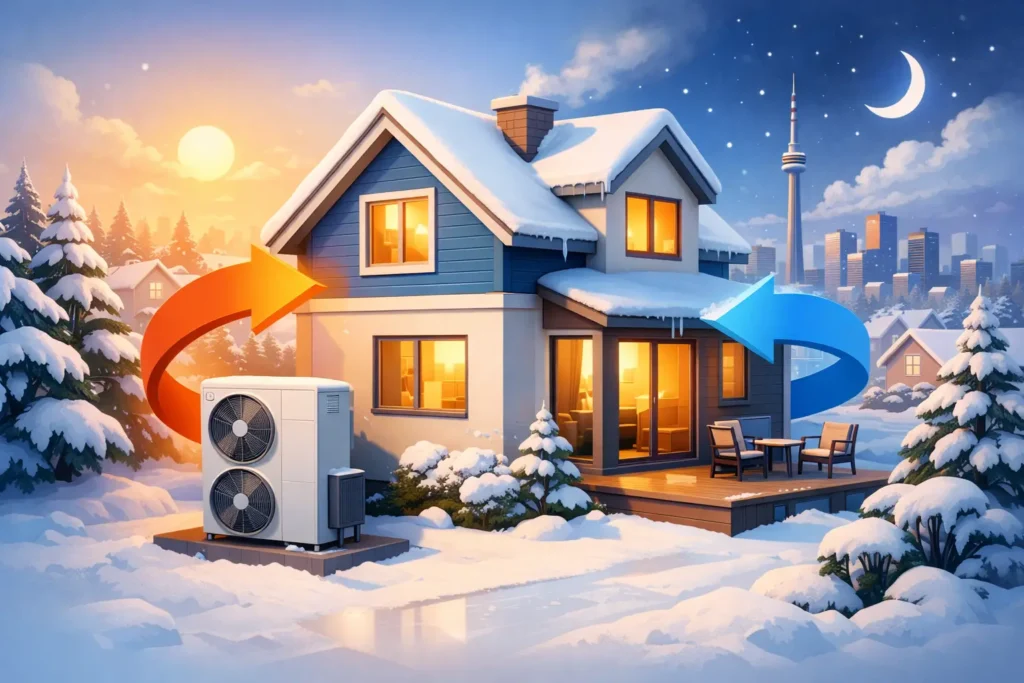
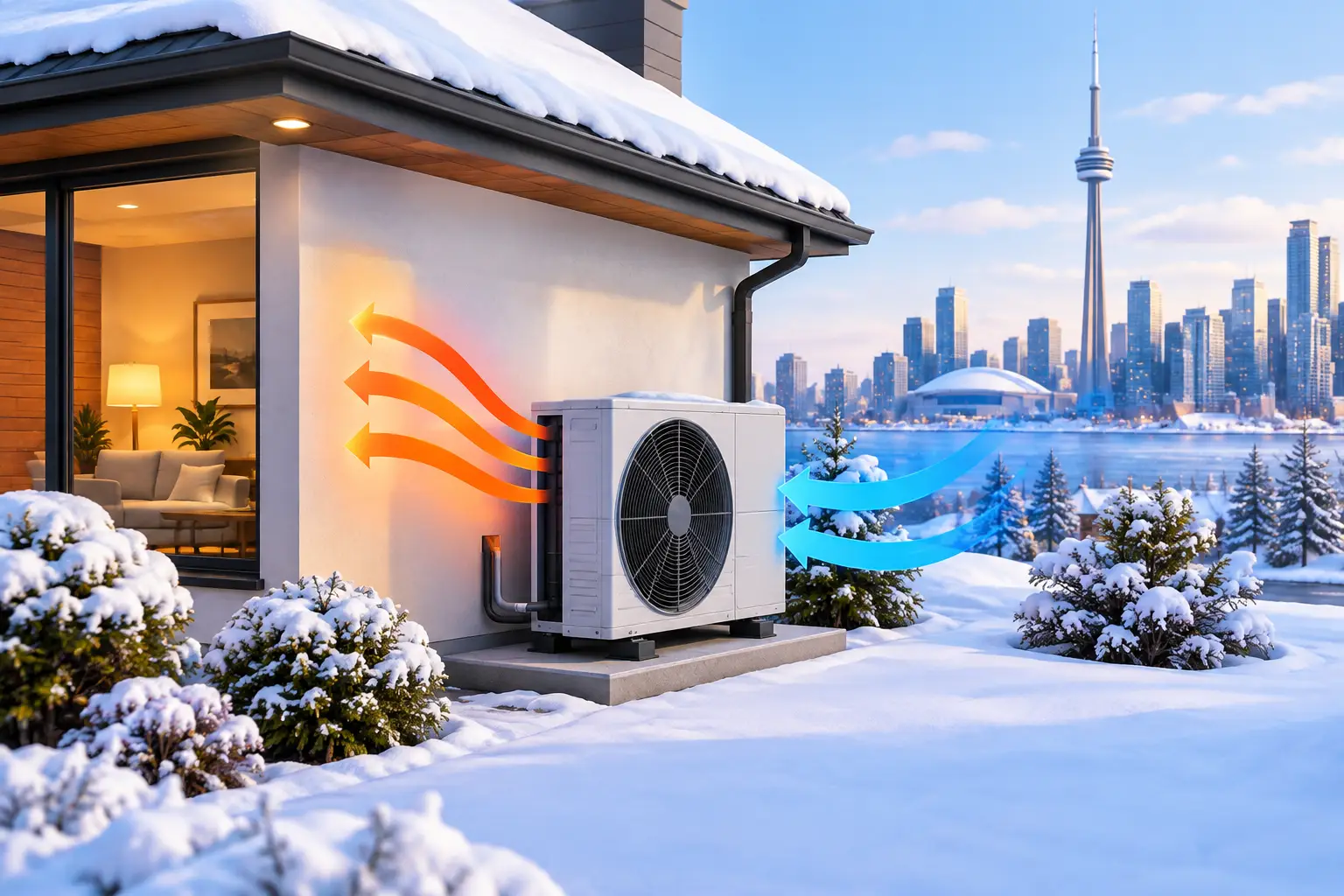
Yes. A heat pump does not create heat by burning fuel. Instead, it transfers heat using refrigerant, much like an air conditioner operating in reverse. Even cold outdoor air contains thermal energy. A cold-climate heat pump is designed to capture that energy and bring it inside.
As outdoor temperatures fall, the unit has to work harder and its heating capacity can decline. That does not mean it stops working at 0 C. Many current cold-climate models continue providing useful heat well below -20 C, although their output and efficiency vary by model.
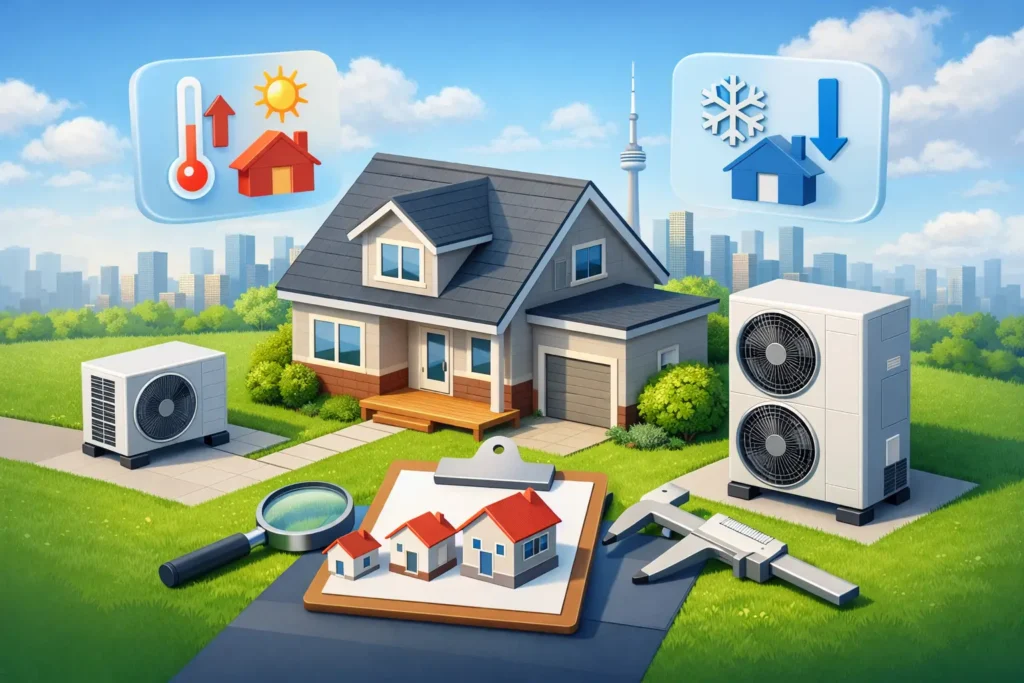
This is why equipment selection matters. A homeowner should not choose a heat pump based only on the size of their current furnace or a single advertised efficiency rating. The system needs to be sized using the home’s heat loss, insulation levels, window condition, layout, and local winter design temperatures. An oversized system can cycle too often, while an undersized one may rely too heavily on backup heat during a cold spell.
Why Heat Pumps Make Sense in the GTA
Toronto-area winters include cold stretches, but much of the heating season sits at temperatures where a heat pump can operate efficiently. During milder fall and spring weather, and on many winter days, it can heat a home using less energy than conventional electric resistance heating.
A heat pump also provides cooling in summer. The same outdoor unit and indoor equipment that deliver heat in January can operate as central air conditioning in July. For homeowners replacing both an older furnace and air conditioner, this all-in-one capability can make the decision easier.
Electricity rates, natural gas costs, equipment pricing, and available incentives can all affect the financial picture. Savings are not identical from one household to the next. A well-insulated home with efficient ductwork may see stronger results than a drafty home with major air leaks. A clear assessment should consider the whole house, not just the equipment label.
Heat Pump Only or Heat Pump With a Furnace?
There are two common approaches for GTA homes.
An all-electric heat pump system uses the heat pump as the primary source of heating, with electric backup heat available when needed. This approach may suit homes with strong insulation, appropriate electrical capacity, and owners looking to reduce their reliance on natural gas.
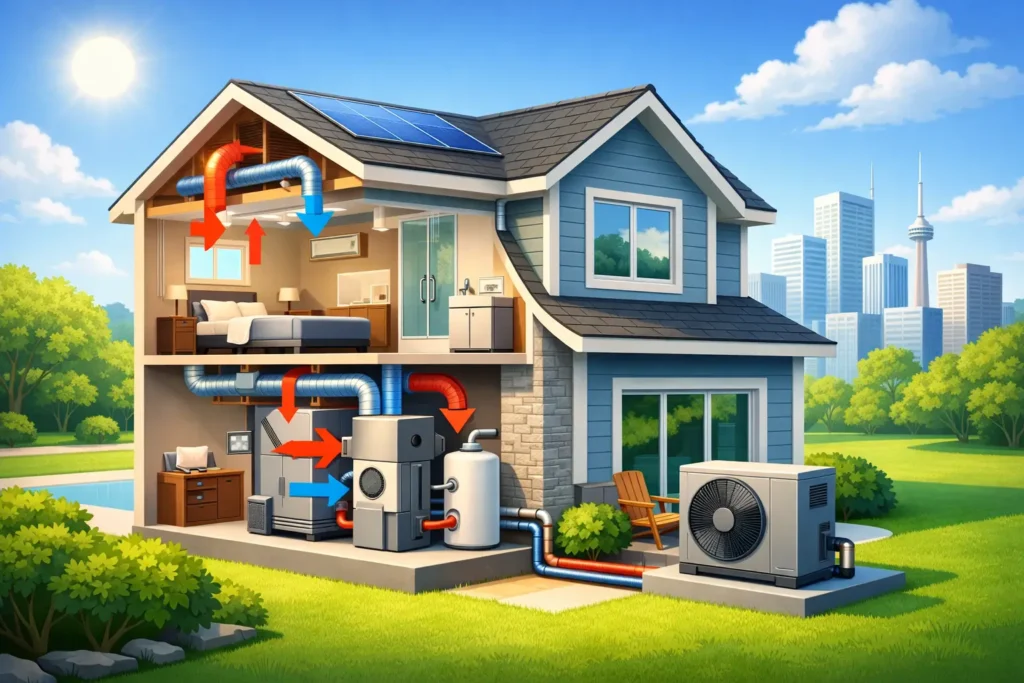
A dual-fuel system pairs a heat pump with a gas furnace. The heat pump handles heating during moderate outdoor temperatures, while the furnace takes over when conditions become cold enough that gas heat is the more practical choice. The changeover point can be set based on outdoor temperature, system performance, and operating costs.
For many existing Toronto homes, dual fuel offers a reassuring balance. The household gets efficient electric heating for a large portion of the year, dependable furnace heat in deep cold, and air conditioning in summer. It can also avoid the need for electric resistance heat as the main backup source.
Neither option is automatically better. An all-electric system can be an excellent choice in the right home. A dual-fuel installation may be more suitable where a newer gas furnace is already in place, the home has higher heat loss, or the owner wants an added layer of winter heating confidence.
The Installation Details That Affect Performance
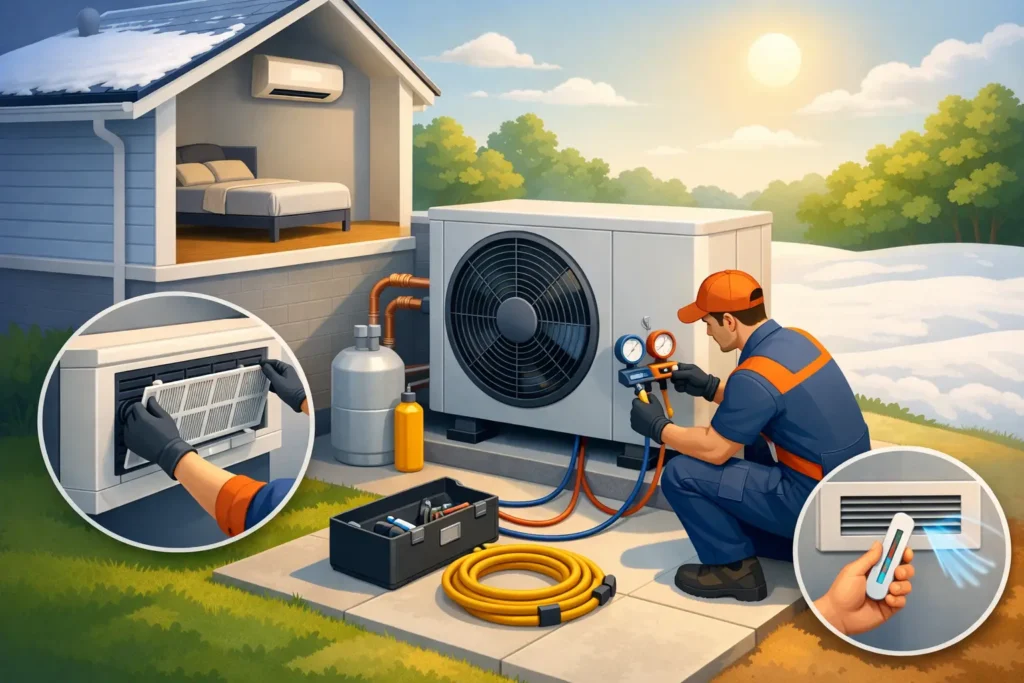
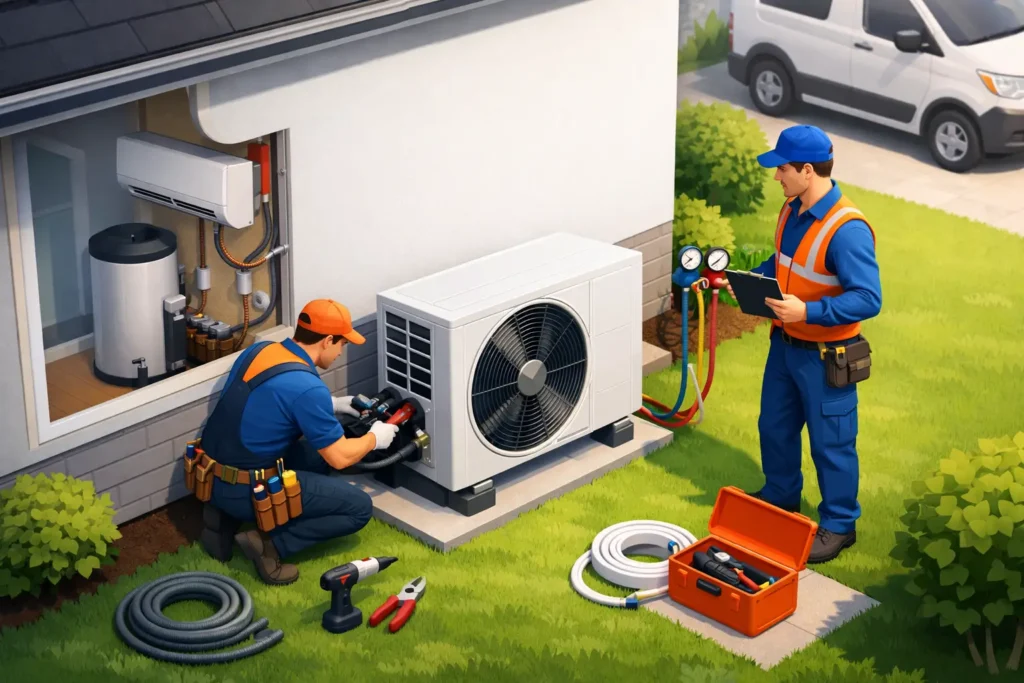
A quality heat pump is only as good as the installation behind it. The outdoor unit needs enough clearance for airflow and service access, with a secure mounting location that accounts for snow, ice, drainage, and vibration. It should not be placed where roof runoff or drifting snow can block the unit.
Inside the home, ductwork condition matters. Leaky, undersized, or poorly balanced ducts can leave rooms unevenly heated regardless of the heat pump’s capacity. In homes without ductwork, a ductless or multi-zone heat pump may be a better option, but indoor-head placement still needs careful planning.
Controls also deserve attention. A thermostat that is not set up for a heat pump can trigger backup heat too soon or fail to manage a dual-fuel system efficiently. Certified technicians should explain how the system will operate before installation begins, including when backup heating is expected to come on.
At Easy Breezy HVAC, that practical conversation matters. Homeowners should know what equipment is being recommended, what the installed price includes, and why the proposed system fits their home before work starts.
What Happens During Defrost Mode?
In cold, damp weather, frost can build up on the outdoor coil. This is normal. The heat pump periodically enters defrost mode to melt that frost and keep air moving through the unit.
During a defrost cycle, the system briefly reverses operation. You may hear a change in sound, see steam rising from the outdoor unit, or notice the indoor air feels less warm for a few minutes. In a properly configured system, backup heat may operate temporarily to maintain indoor comfort.
Steam from the unit is commonly mistaken for smoke, especially on a cold morning. It is usually just water vapour. However, repeated thick ice buildup, unusual grinding noises, poor heating output, or water pooling and refreezing around the unit are reasons to arrange service.
When a Heat Pump May Not Be the Best First Move
Heat pumps can work very well, but they are not a one-size-fits-all answer. If a home has severe insulation gaps, major drafts, or failing windows, addressing those issues may improve comfort more than changing equipment alone. A heat loss assessment can identify whether the heating problem is really the system, the building envelope, or both.
Electrical capacity is another consideration for all-electric heating. Depending on the equipment and the home, a panel upgrade may be required. This can affect project cost and timing.
Homeowners should also be cautious about replacing working equipment simply because a heat pump is popular. If a reliable gas furnace has years of useful life left, pairing it with a heat pump may be more sensible than removing it. The right recommendation should reflect the home’s condition, your comfort goals, and your budget.
Questions to Ask Before You Buy
Before approving a heat pump installation, ask how the contractor calculated the required capacity and what heating output the chosen model delivers at low temperatures. Ask whether the system is designed as heat-pump-only or dual fuel, and what will provide backup heat during extreme cold.
It is also worth confirming where the outdoor unit will sit, how snow and condensate will be managed, whether ductwork changes are needed, and what warranty covers labour as well as equipment. Clear answers now help prevent surprises later.
A heat pump should make your home more comfortable, not leave you guessing during the first cold snap. With properly matched equipment, professional installation, and a plan for the coldest GTA days, it can be a dependable part of your home’s heating system for many winters to come.