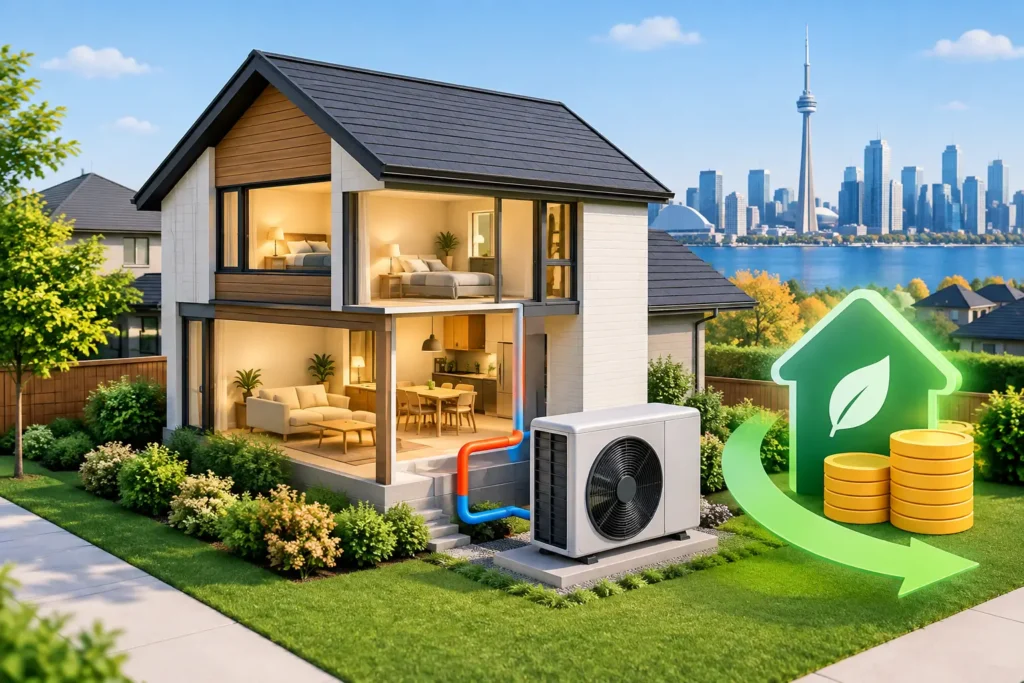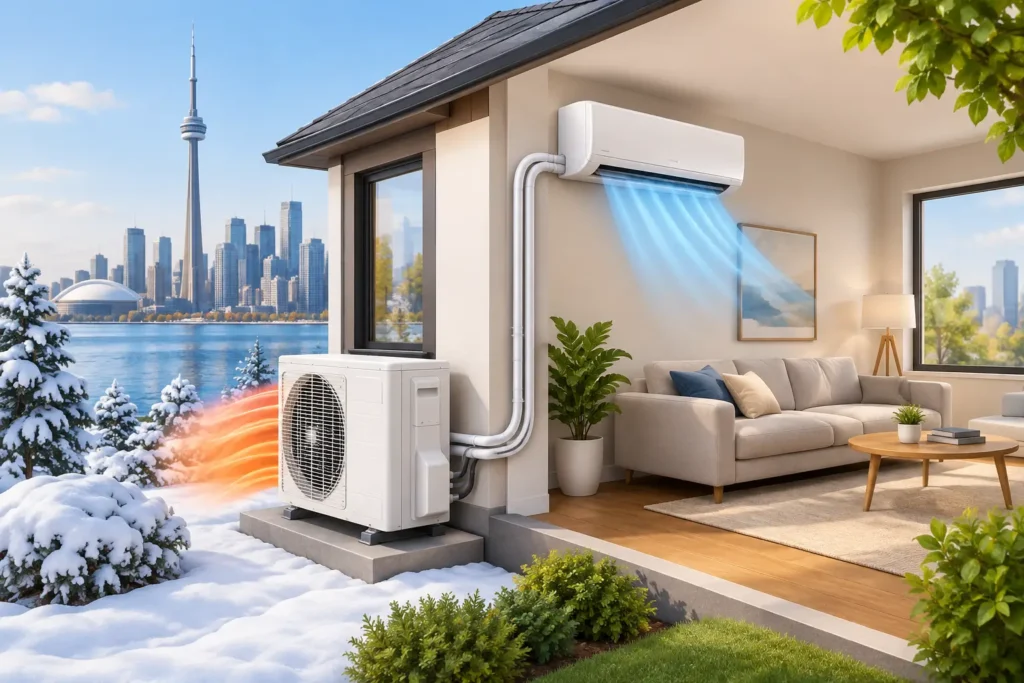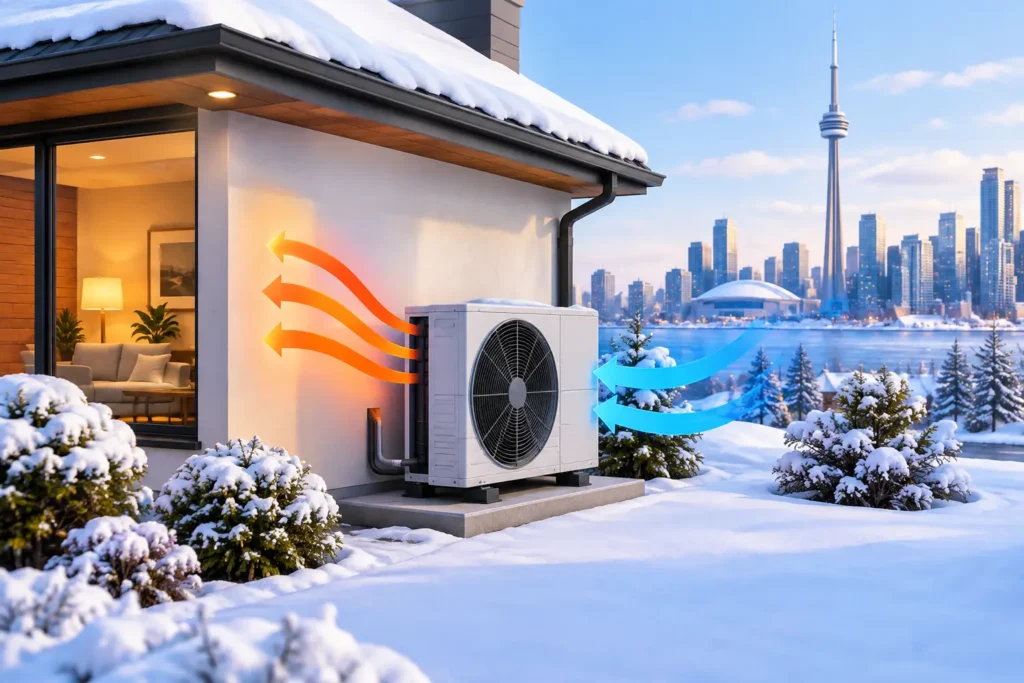
A heat pump that performs well during a mild autumn day is not automatically the best heat pump for cold climate conditions. In Toronto and across the GTA, the real test arrives when temperatures fall below freezing, wind picks up, and your home needs steady heat for days at a time. The right system can lower heating costs and provide reliable summer cooling. The wrong one can leave you relying heavily on backup heat when you need efficiency most.
For most homeowners, the best choice is not a single brand or a unit with the highest advertised efficiency rating. It is a properly sized cold-climate heat pump matched to the home, ductwork, electrical capacity, insulation level, and heating goals. That is why an in-home assessment matters before comparing equipment prices.
What Makes a Heat Pump Suitable for Canadian Winters?
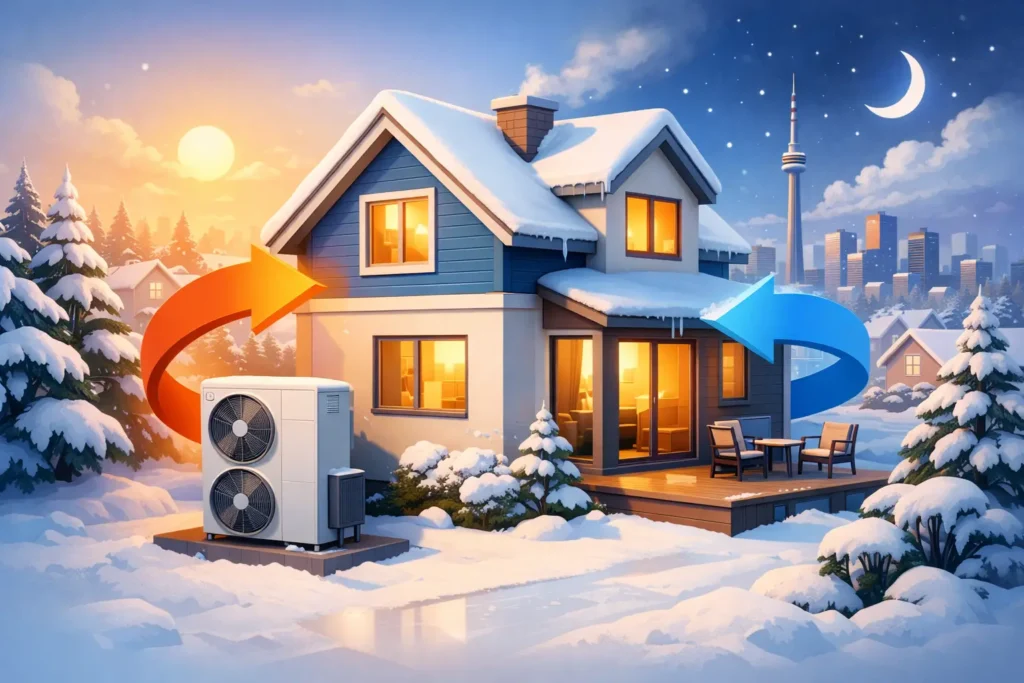
A standard air-source heat pump moves heat from outdoor air into your home. Even cold outdoor air contains some heat energy, but the system has to work harder as the temperature drops. Cold-climate models are designed to maintain useful heating capacity at lower temperatures than conventional heat pumps.
When comparing equipment, ask how much heating capacity the unit can deliver at 0 C, -15 C, and lower temperatures. A model may have an excellent efficiency rating in moderate weather but lose a significant amount of output during a cold snap. The best systems are engineered to keep operating efficiently in colder conditions, rather than switching to expensive electric backup heat too early.
Look for a variable-speed, or inverter-driven, compressor. Instead of simply turning fully on and off, it can adjust its output to match the heating demand. This typically means more even indoor temperatures, quieter operation, and less wasted energy during the long shoulder seasons common in southern Ontario.
Best Heat Pump for Cold Climate Homes: What to Compare
Heating capacity at low temperatures should carry more weight than a headline efficiency number. Seasonal efficiency still matters, but homeowners should understand what each rating means.
HSPF measures heating efficiency over a season, while SEER measures cooling efficiency. Higher ratings can be beneficial, but they do not tell the entire story. A unit with strong low-temperature capacity and a sensible installation design may be a better fit for a GTA home than a higher-rated unit that needs substantial backup heat below -10 C.
Pay attention to the manufacturer’s stated operating range and capacity retention. Some cold-climate units can continue providing heat well below -20 C, although their efficiency and output will decline as temperatures fall. Your contractor should explain the balance point – the outdoor temperature where the heat pump alone can no longer meet the home’s full heating load. Below that point, a backup heat source may assist.
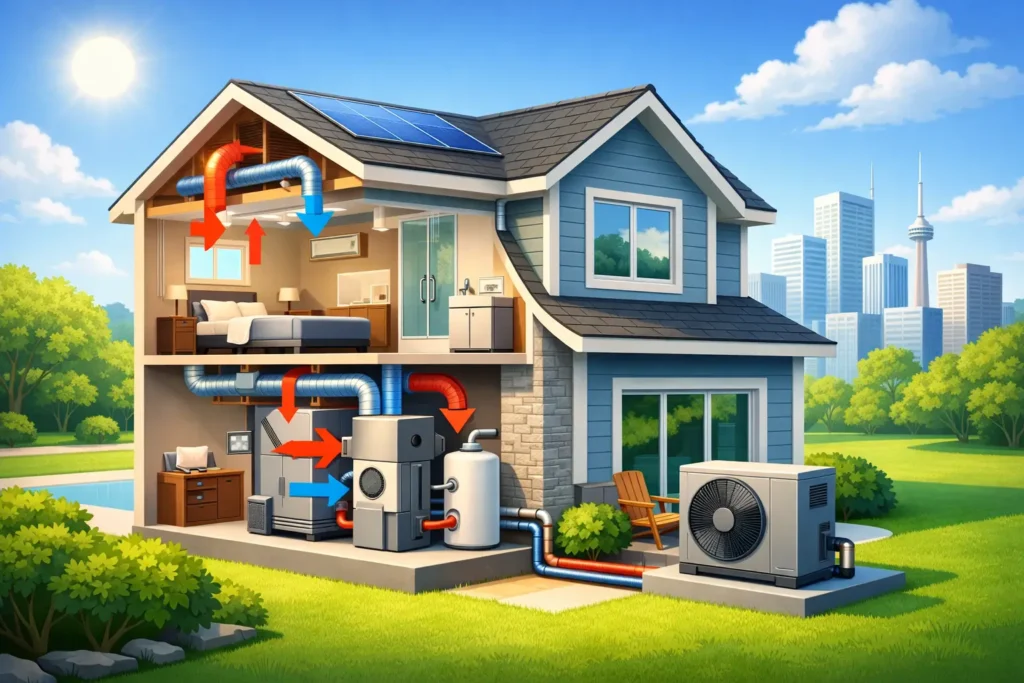
For a house with a gas furnace, a dual-fuel setup is often worth considering. The heat pump handles heating through milder and moderately cold weather, while the furnace takes over when it becomes more economical or necessary during severe cold. This approach can offer dependable comfort without forcing one system to do every job.
An all-electric setup can also work very well, particularly in an efficient home with the right electrical service and properly selected supplemental heat. The best option depends on your home, local utility costs, and whether reducing natural gas use is a priority.
Size It for the House, Not the Square Footage
Choosing a heat pump based only on square footage is one of the most common and costly mistakes. Two 2,000-square-foot homes can have very different heating requirements. One may have new windows, attic insulation, and a tight building envelope. The other may have air leaks, older ductwork, and rooms over an uninsulated garage.
An oversized heat pump can cycle too often in milder weather. That can reduce comfort, increase wear, and make humidity control less effective during cooling season. An undersized system may run continuously and rely too much on backup heat when temperatures drop.
A proper load calculation considers insulation, windows, orientation, ceiling height, air leakage, occupancy, existing ductwork, and local design temperatures. It takes more effort than a quick rule of thumb, but it gives you a system selected for your actual home.
This is especially important for older Toronto-area houses. Many have additions, finished basements, or renovated sections that do not heat evenly. Before selecting equipment, address obvious insulation gaps, duct restrictions, and airflow problems. A high-quality heat pump cannot compensate for every weakness in the building or distribution system.
Ducted, Ductless, or Dual Fuel?
A ducted heat pump is usually the most straightforward option when your home already has a well-designed forced-air system. It can use the existing supply and return ducts to provide whole-home heating and cooling. However, ducts need to be inspected. Leaks, poor return airflow, and undersized runs can limit performance and create hot or cold rooms.
Ductless mini-split systems are often a strong solution for homes without ductwork, additions, converted attics, and areas that have always been difficult to heat. A wall-mounted or floor-mounted indoor unit gives the system direct control over that space. The trade-off is that a single indoor head may not distribute heat evenly through a closed-off, multi-room layout.
Dual-fuel systems pair a heat pump with a gas furnace. For many GTA homeowners replacing an aging air conditioner and furnace at the same time, this can be a practical path. It delivers efficient electric heating through much of the year while retaining furnace capacity for the coldest days. Controls should be set up carefully so the system changes heat sources at the right temperature and cost point.
Installation Quality Has a Major Impact
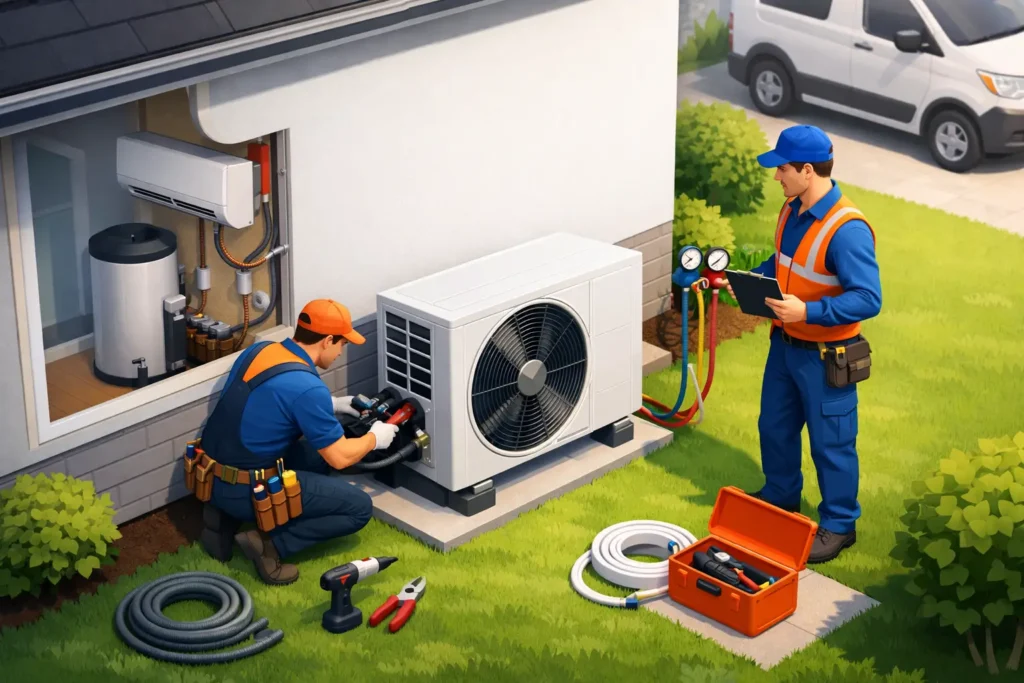
Even the best cold-climate heat pump will disappoint if it is installed poorly. Refrigerant charge, line-set sizing, airflow, drainage, electrical connections, thermostat setup, and outdoor-unit placement all affect performance.
The outdoor unit needs adequate clearance for airflow and defrosting. It should not be placed where roof runoff, snow drifts, or blocked discharge air can create problems. During winter, heat pumps periodically enter a defrost cycle to clear frost from the outdoor coil. Proper drainage and mounting help prevent meltwater from refreezing around the unit.
Inside the home, the thermostat and control strategy matter just as much. A system that is not configured correctly may bring on electric heat too aggressively, switch to a furnace too soon, or create uncomfortable temperature swings. Certified technicians should test the system in both heating and cooling modes, explain the controls, and make sure you understand basic maintenance requirements.
Transparent installed pricing is useful here because it helps you compare more than the equipment nameplate. Confirm what is included: removal of old equipment, electrical work, refrigerant lines, thermostat, permits where required, commissioning, and warranty coverage. A lower equipment price can become less attractive if essential installation work is excluded.
Maintenance Helps Protect Winter Performance
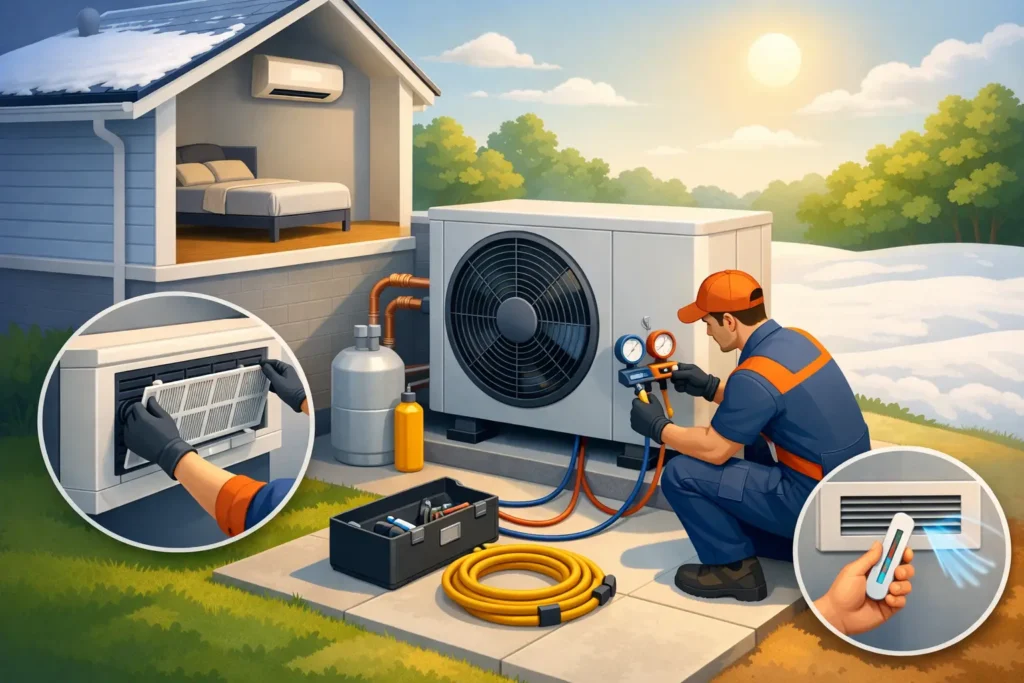
Heat pumps need routine attention, just like furnaces and air conditioners. Keep indoor filters clean, maintain clear space around the outdoor unit, and avoid stacking snow against it. Do not chip ice from coils or spray the unit with hot water, as this can damage components or create a larger ice problem.
Annual professional maintenance helps identify airflow issues, loose electrical connections, drainage concerns, and refrigerant problems before they affect comfort. For a dual-fuel system, both the heat pump and furnace should be checked. Property managers should also make sure occupants know not to block supply vents or outdoor equipment.
Questions to Ask Before You Buy
Ask your contractor whether the proposed model is rated for cold-climate operation, how much capacity it retains at low temperatures, and what backup heat is recommended for your home. Ask whether a load calculation and duct assessment are included. You should also understand the expected balance point and how the thermostat will decide between heat pump and backup heat.
It is reasonable to ask about warranty terms, labour coverage, maintenance needs, and the full installed price before work begins. A clear answer is a good sign. If a recommendation is based only on a quick look at your old equipment size, request a more detailed assessment.
For homeowners in the GTA, a cold-climate heat pump should be chosen for the winter you actually experience, not just the efficiency shown on a brochure. A properly sized and carefully installed system gives you the best chance of steady comfort, sensible operating costs, and fewer surprises when the temperature drops. If you are replacing equipment soon, start with a home-specific assessment and choose the system that fits your heating plan for the next 10 to 15 years.